
Visual Storytelling
An experimental learning system for a visual-first generation.
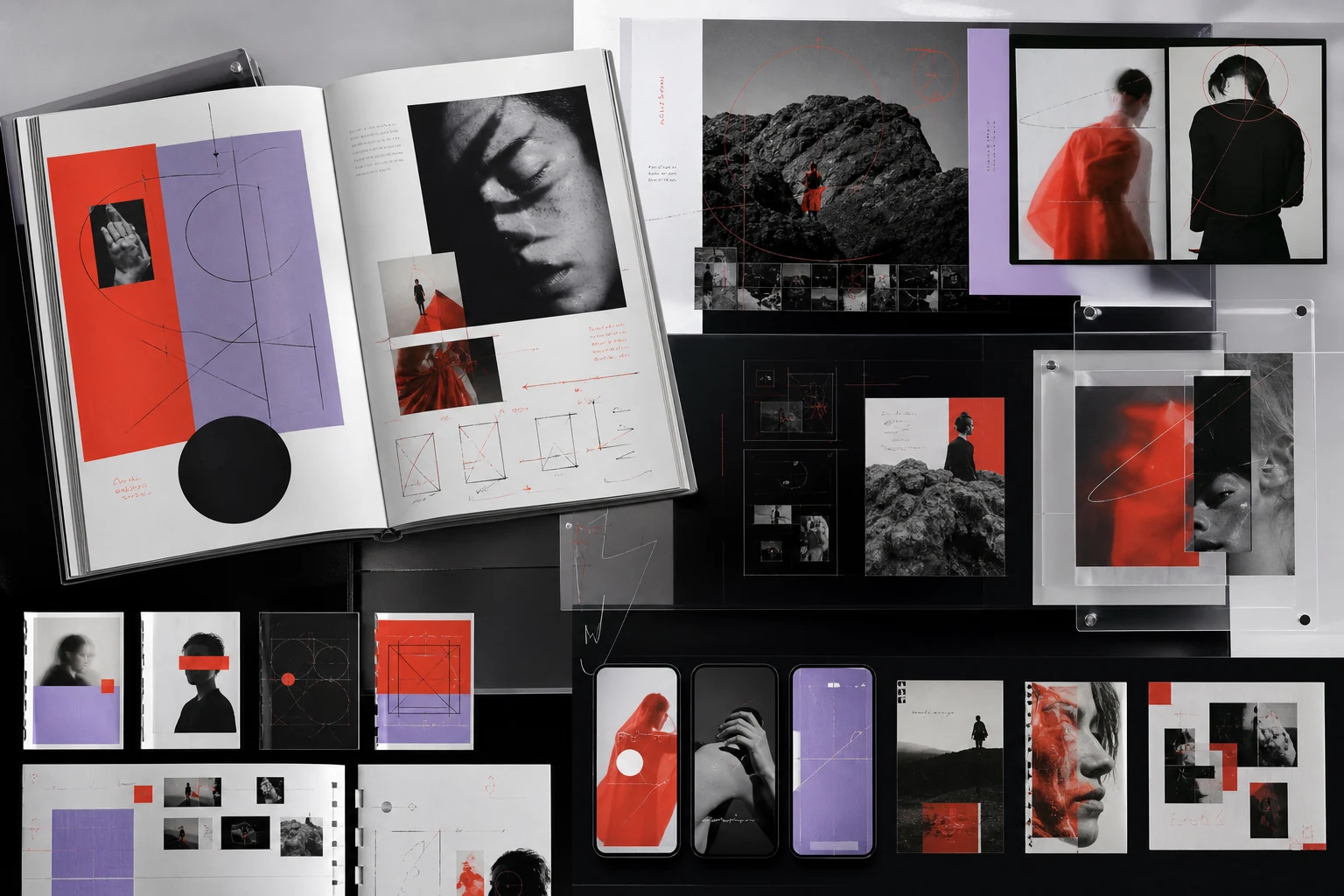
Project overview
Visual Storytelling is an energetic course ecosystem that teaches creators to see, sequence and communicate with greater intention.
The challenge
The course needed to hold expressive imagery, technical annotations and practical assignments without turning into visual noise.
Visual direction
Black and white photography is disrupted by tomato red, dusty lavender and hand-drawn construction lines.
The system
A flexible annotation language connects the workbook, shot analysis, assignments, reel covers and campaign materials.
Context
A course for creators who want to understand the decisions inside an image.
Visual Storytelling is for photographers, authors and content creators who want to work with composition, sequence and visual narrative more deliberately. The programme combines image analysis, technical principles, creative assignments and short-form video. Its design needed enough energy for a visually literate audience without turning the learning material into a noisy moodboard.
The course creator supplied the approved programme, copy, examples, critiques and assignments. The central design challenge was the proximity of strong photography, annotations, diagrams and longer explanations. The system needed to distinguish the image, the author’s commentary, the construction line and the practical brief without changing their substance or breaking the relationship between them.
Visual direction
A visual language with a clear point of view.
Editorial serif
+ precise grotesk
Creative premise
Not a collection of beautiful images, but a working laboratory for seeing.
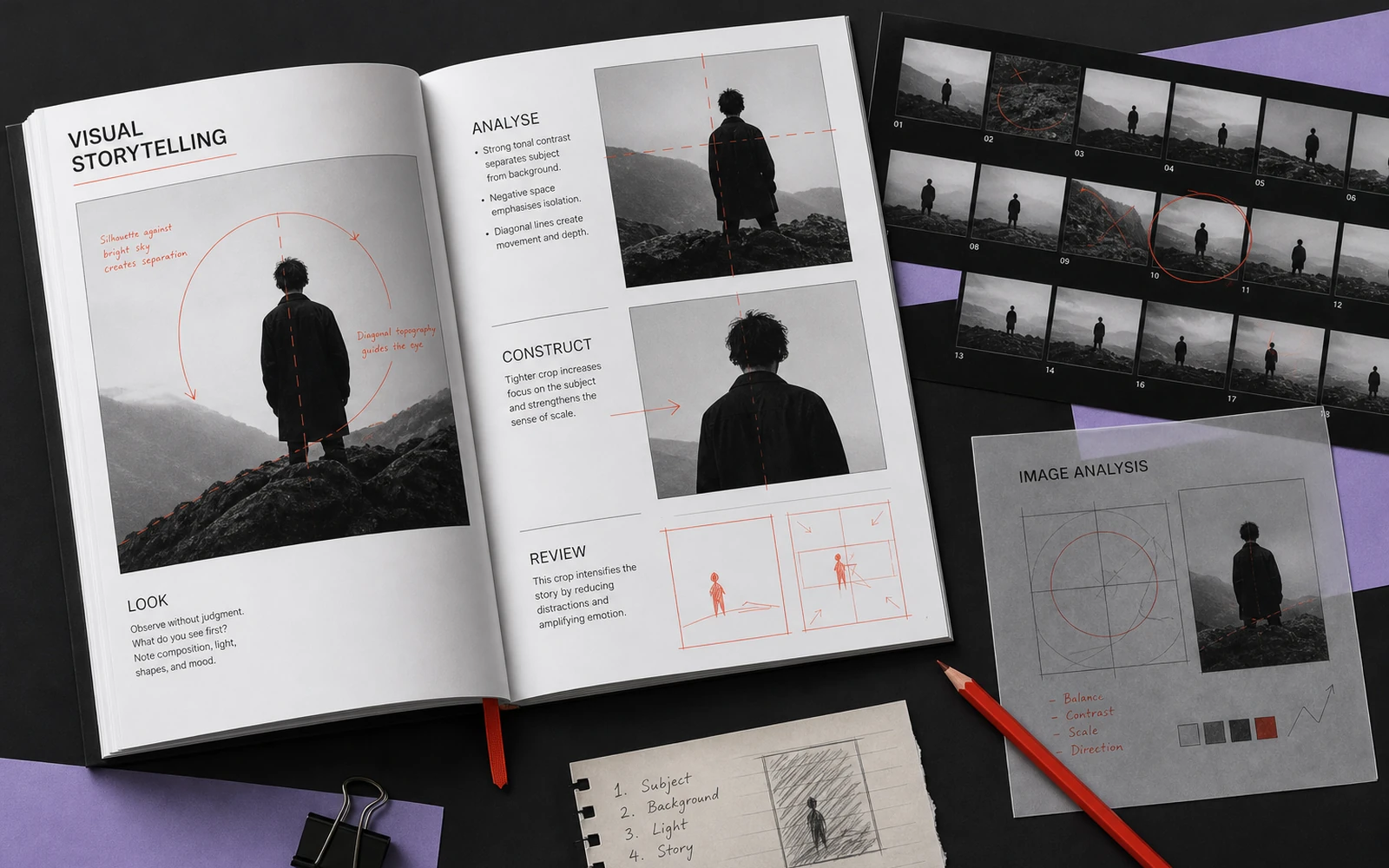
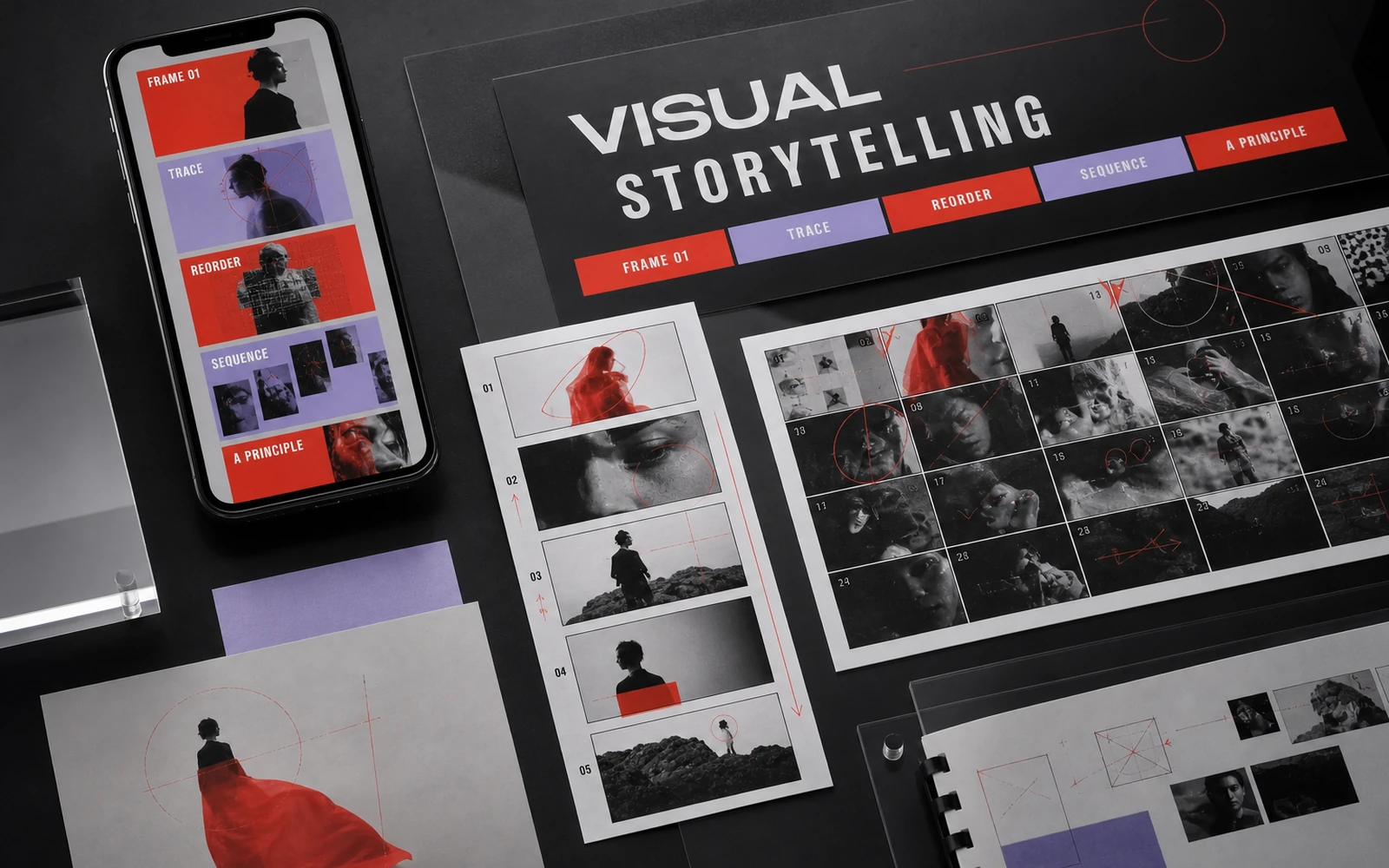
The visual language recalls an art director’s desk: contact sheets, crops, frames, notes, arrows and construction lines. Every gesture has a job. A frame defines the composition, a red line traces the eye, a number marks sequence and a lavender field holds context or an alternative. Expressiveness becomes a tool for explanation rather than a layer placed over it.
The name shifts attention from a single striking image to the way images work together. Rhythm matters as much as the page itself: approach, pause, detail, scale change and recurring motif. The principle moves from workbook to lesson slide and Reel, allowing learners to see how sequence changes meaning.
Visual system
Black-and-white imagery, tomato red and dusty lavender control the tension.
Monochrome photography creates common ground for very different visual styles. Tomato red marks a constructive action: direction, boundary, problem or focal point. Dusty lavender holds secondary context, an alternative or a pause. Because each accent has a defined role, it remains part of the analytical language rather than becoming a random effect.
A large serif gives headings editorial scale; a grotesk carries instructions, captions and technical data. The grid can remain strict on a theory page and break across an image sequence while margins and metadata stay consistent. Hand-drawn construction lines keep the sense of process visible and suggest that a visual decision can be examined, not merely felt.
Visual organisation of the materials
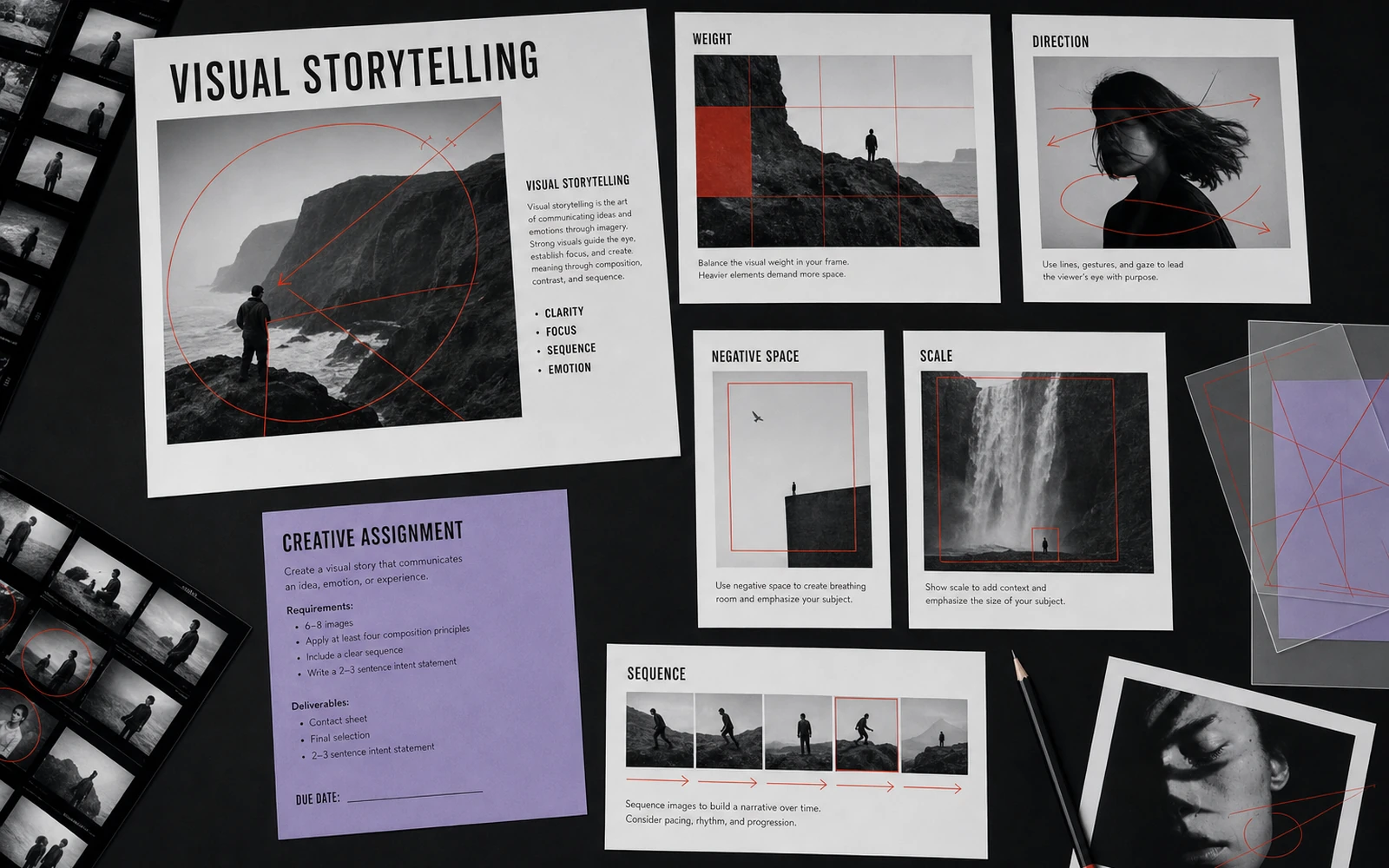
Analysis, principle and creative assignment each receive a distinct page type.
The author’s established cycle—look, analyse, construct, review—became a repeatable family of pages. An example, annotated critique, concise principle, assignment and selection area each have a different visual role. The design preserves the teaching logic and makes the workbook easier to navigate without substituting the author’s explanation with a ready-made answer.
The supplied composition models were translated into diagrams for weight, direction, scale, negative space and sequence. A diagram can sit over an image, separate from it and return beside another example. Assignment constraints, criteria and outputs remain the author’s; design makes them distinct and usable rather than rewriting the brief.
Understand
Apply
Learning experience
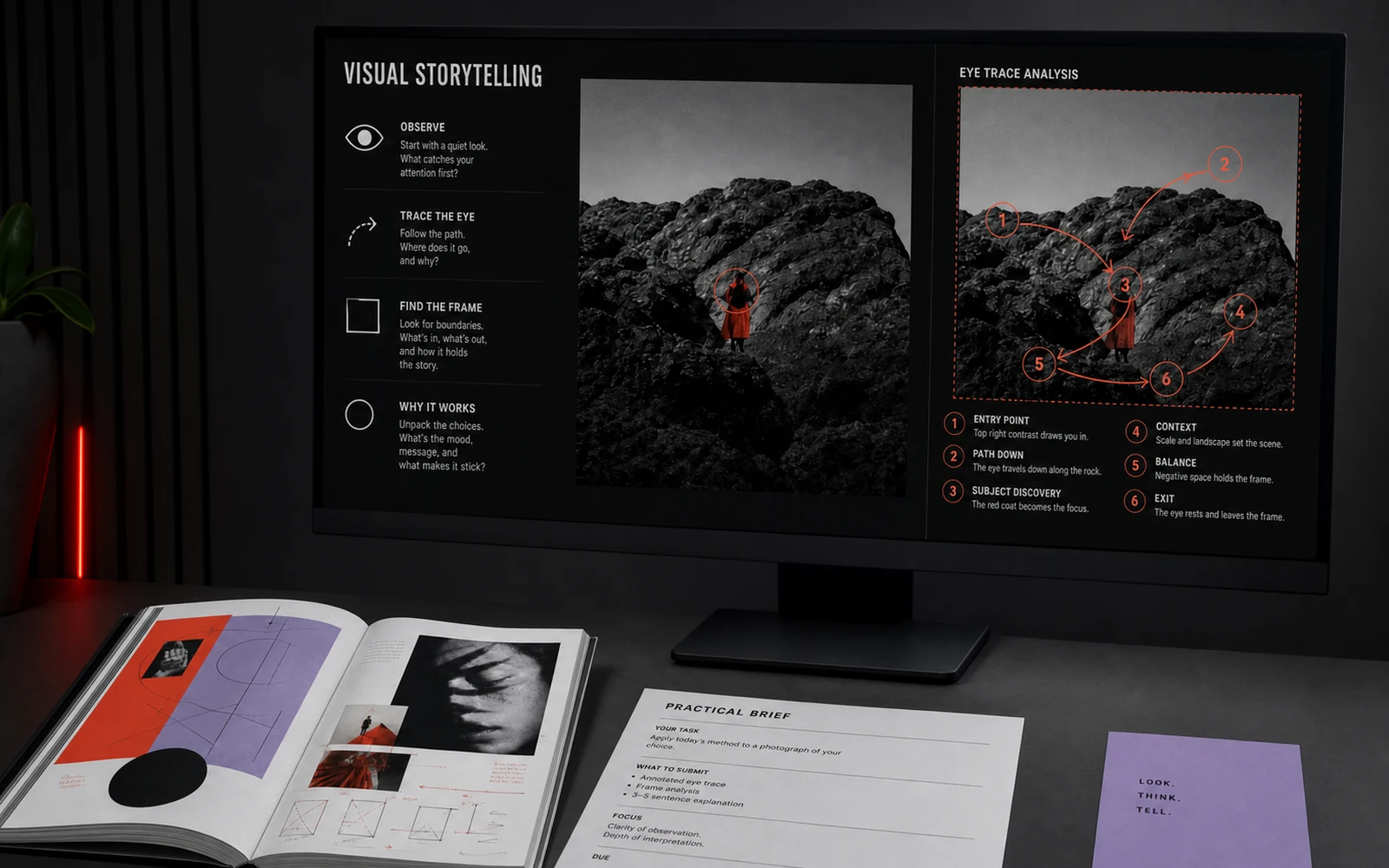
Learners see the route to a decision, not only the finished frame.
The lesson slide system supports collective analysis. A photograph may appear first without guidance, then with one line, several points and finally the complete diagram. The instructor controls the pace of observation instead of revealing the conclusion immediately. Afterwards, the workbook preserves the full critique and leads to the author’s practical assignment.
Design separates the brief, constraint, reference and review criteria in every exercise. This helps learners experiment within a clear frame. Contact-sheet and selection pages make it possible to judge a series rather than one isolated image. The course can therefore teach reasoned visual choices rather than imitation of a particular composition.
Launch system
Motion and Reels demonstrate the method before registration.
Reel covers and motion assets use the same frames, annotations and staged reveals. A short sequence can begin with an image, trace its movement, change the order and close on a principle. The campaign does not merely announce a visual storytelling course; it offers a small, credible experience of how participants will learn to look.
The creator launch campaign combines critiques, assignments, workbook fragments and expressive image sequences. Stories act as quick observations, posts preserve deeper analyses, banners state the offer and motion demonstrates sequence. Red and lavender hold those different tempos together and carry naturally into the lesson slides after the programme begins.
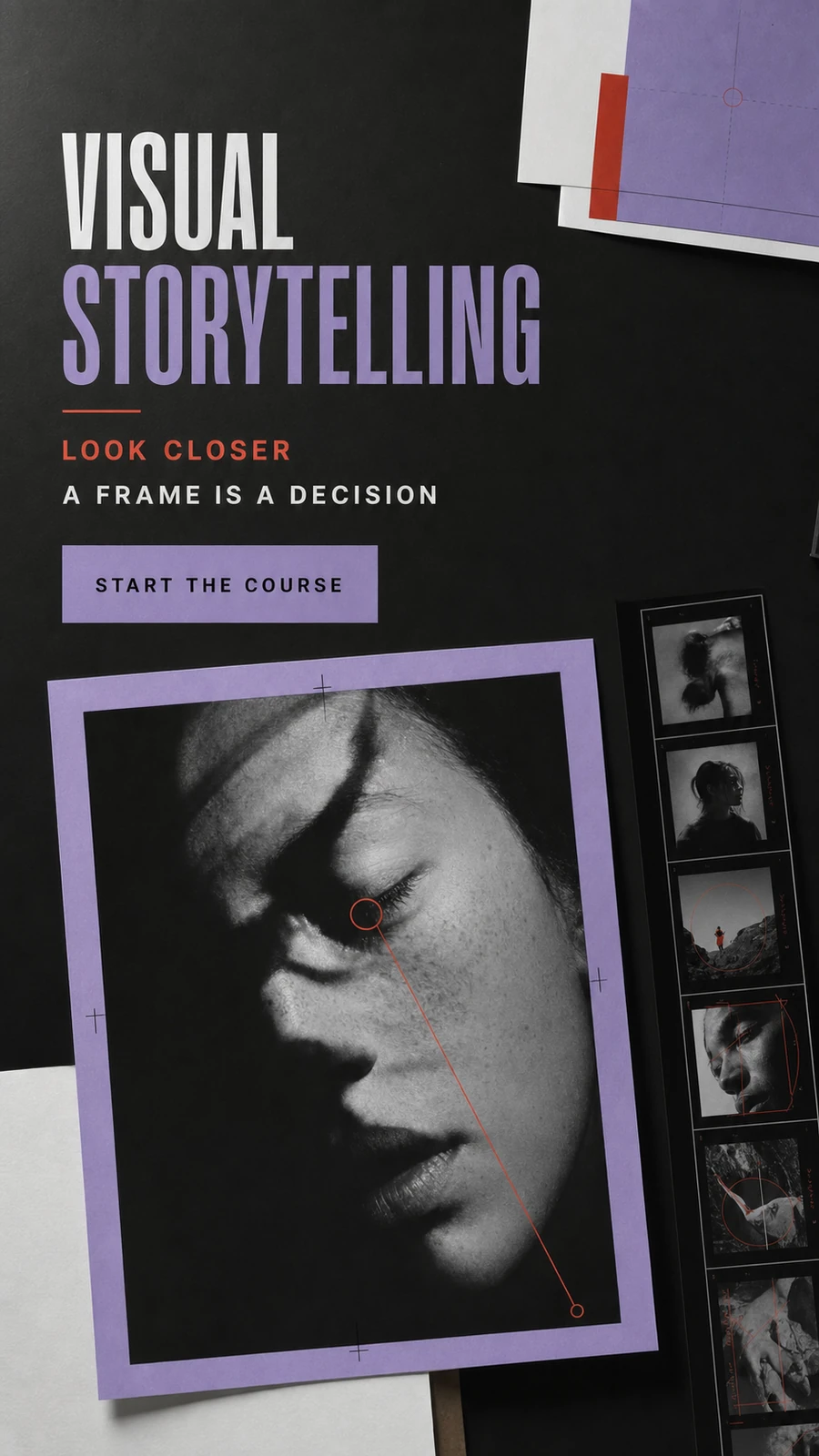 Story 9:16
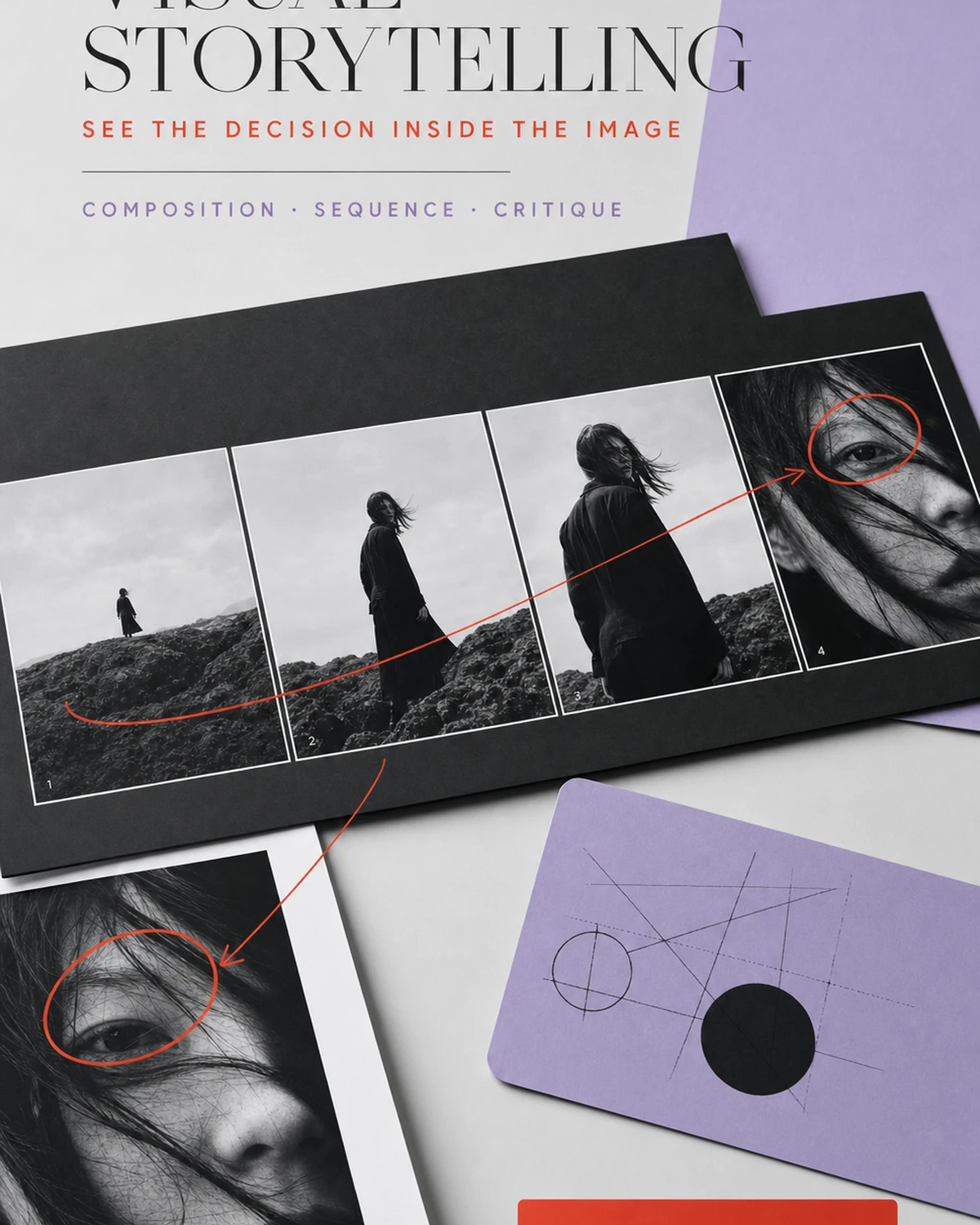 Social 4:5
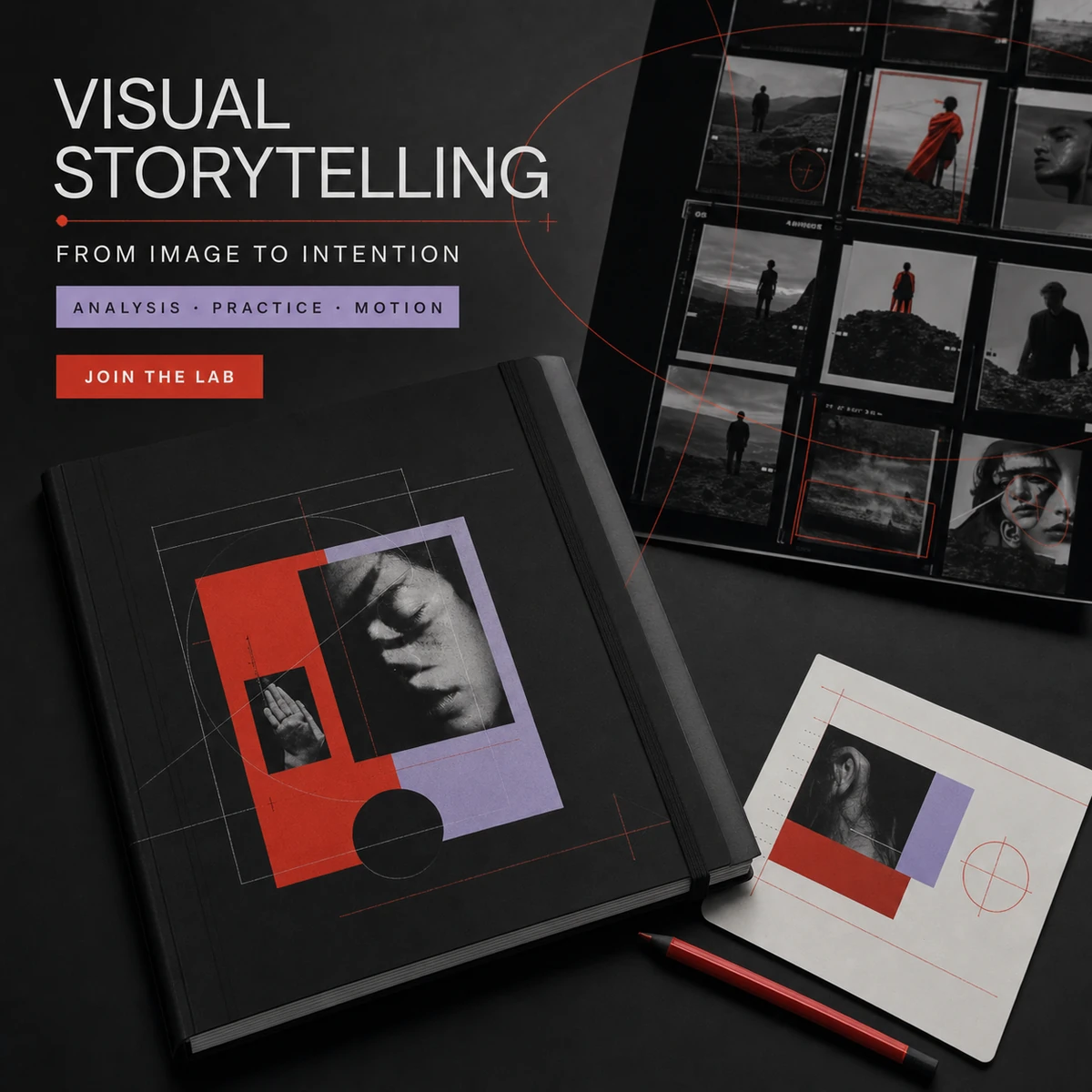 Campaign 1:1
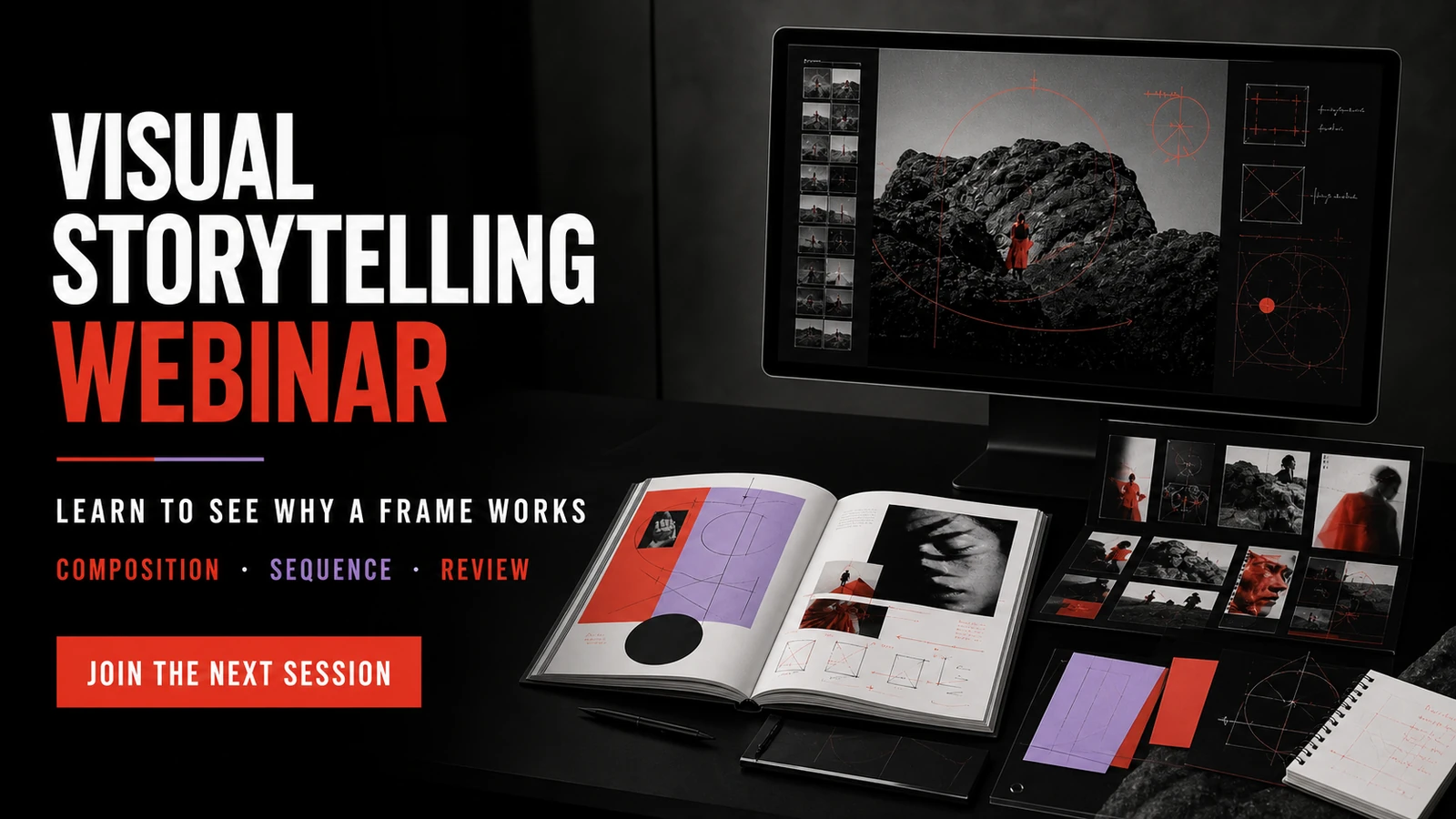 Webinar 16:9
System deliverables
Editorial workbook
Composition diagrams
Creative assignments
Lesson slide system
Reel covers and motion assets
Creator launch campaign
What the system enables
Visual Storytelling turns an experimental aesthetic into a precise learning tool.
The editorial workbook, composition diagrams, creative assignments, lesson slides, Reel covers, motion assets and launch campaign share one annotation language. The system is expressive enough for a visually experienced audience and controlled enough to keep analysis from disappearing behind style. Every format shows not only what is compelling, but why a decision works.
Future modules on colour, editing, portraiture or series can use the same roles for frames, lines, accents and metadata. The system is not tied to one set of images and can hold many authorial styles. That gives the course room to grow while remaining a recognisable laboratory for visual thinking.