Quotes for course design are hard to compare because the phrase hides different kinds of work. A budget becomes honest when you name the level, not the hourly rate or the page count: layout, editorial assembly, original diagrams, or several formats at once.
Four densities inside a single “page”
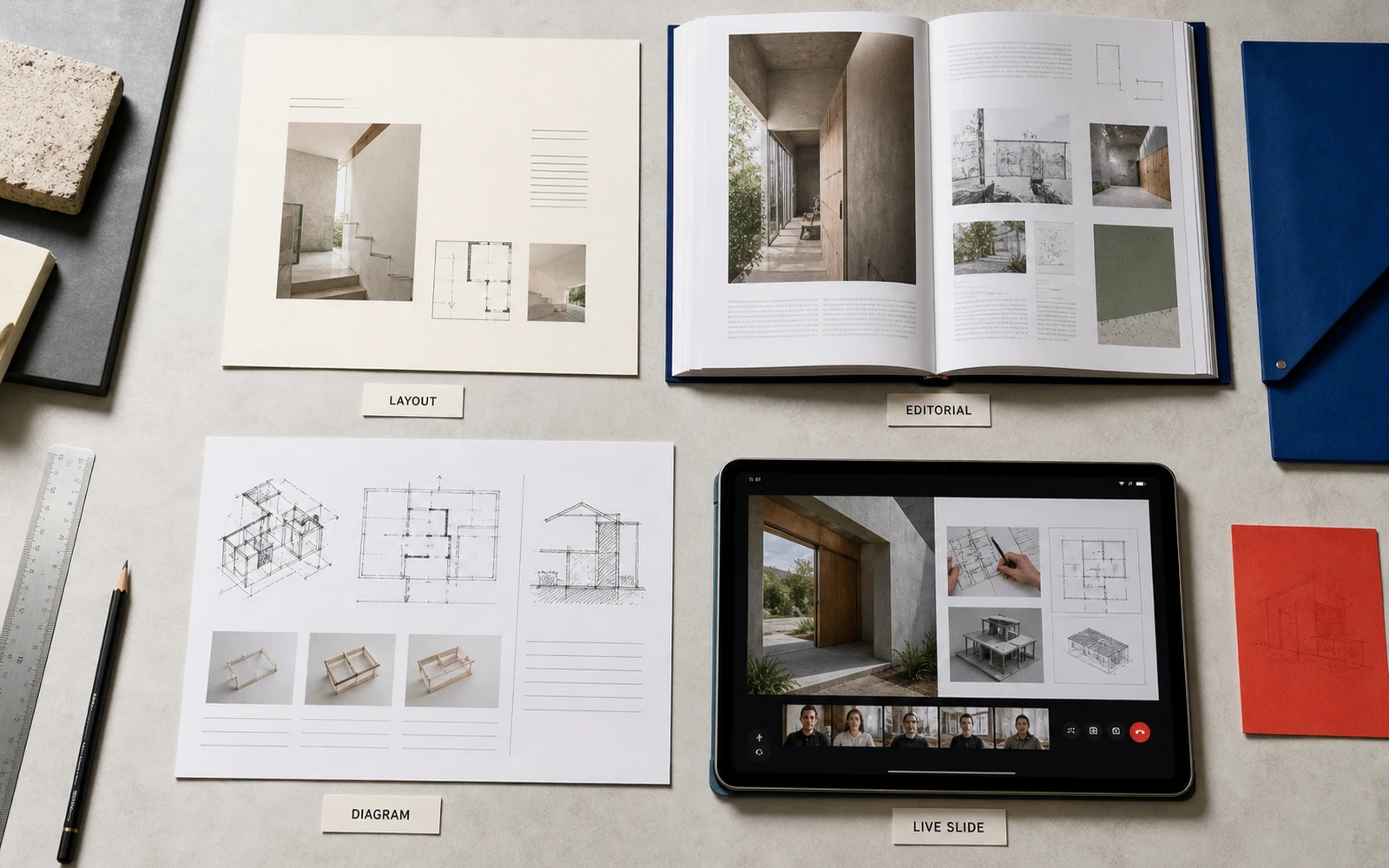
Price-per-page is convenient and a poor measure. A spread with two short paragraphs is one density. A page that holds an original diagram and an exercise is another. A slide that has to survive a live lesson is a third. A frame that lives for three seconds is a fourth.
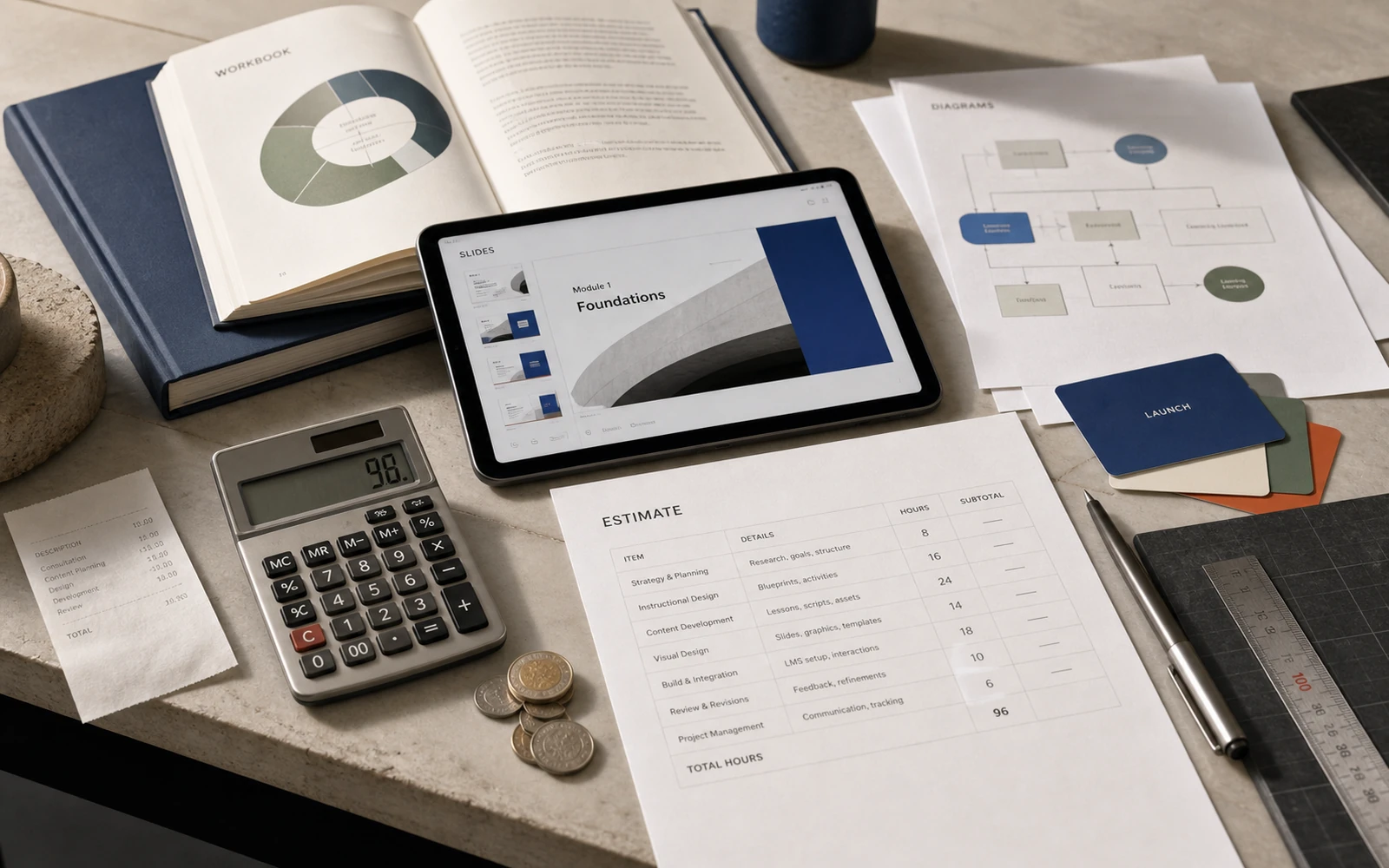
The labour inside those pages differs too. Layout places approved copy into a logic that already exists. Editorial assembly decides where the pause is and where the action sits. An original diagram pulls structure out of the method. Multiple formats then translate the same language onto other surfaces. Two invoices that both say “80 pages” can differ by half — not because one designer is “more expensive,” but because the work is not the same.
What actually moves the scope
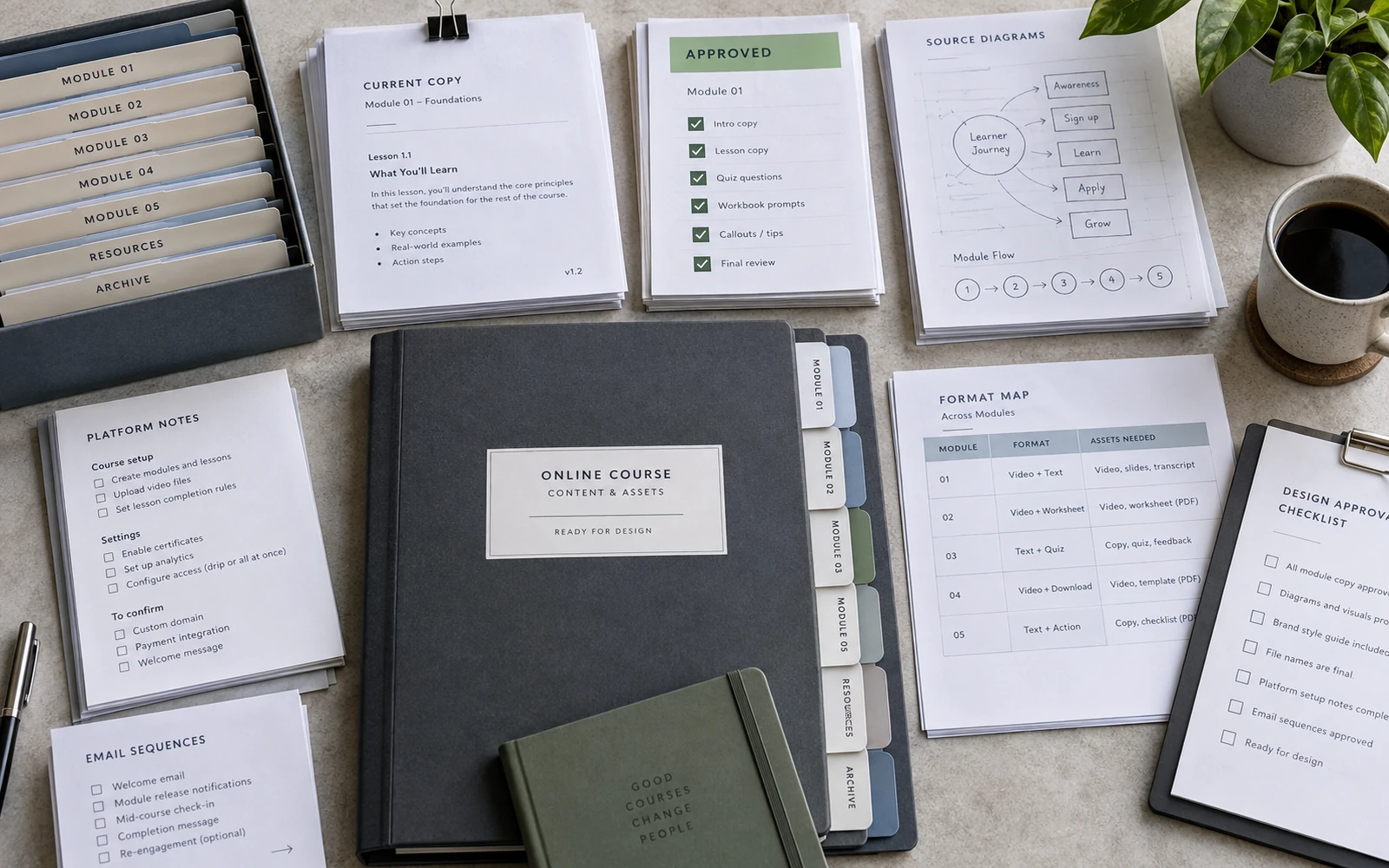
Unfinished content shifts the quote: raw modules mean the decoding is paid for inside design, not before it. Then comes the range of surfaces. Each new format either enters a language you have already bought, or is invented again. Original diagrams cost more than filling a frame that already exists. Three revision rounds and a compressed deadline are scope as well — not a matter of “working style.”
Three typical levels of investment
It is more useful to think in three levels than in a universal price. They are not fixed packages. They make it clearer what you are actually buying.
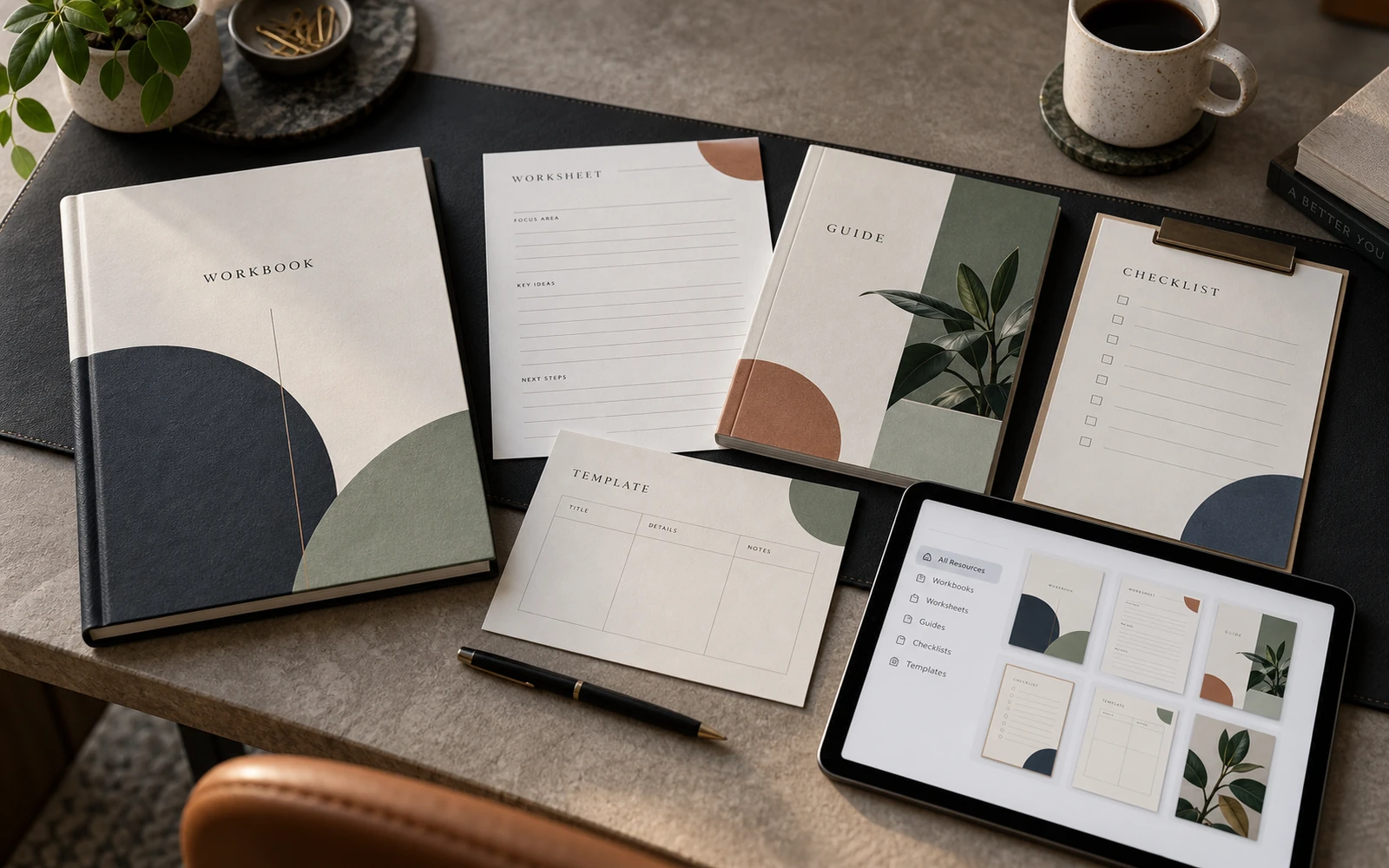
The first level is a focused set. Usually a workbook or a slide deck, sometimes both, with a clear hierarchy and a handful of repeating page types. That is enough when the product is still taking shape, the content is limited, and the launch does not need a campaign language of its own. This is not “cheap.” It is a deliberately narrow brief.
The second level is the course plus the key materials before lesson one, held in one language. Frames already exist, and so do a few launch surfaces. The third is an ecosystem built to last: original frameworks, the campaign, motion, later cohorts. Paying for the third “just in case” is rarely worth it. Paying for it once the product is a business is often cheaper than rebuilding the language every season.

You are not paying for the number of files. You are paying for how many decisions you will not have to invent again.
What sits outside the design quote
A design fee does not, by itself, include the curriculum, sales copy, translation, proofreading, photography, heavy motion, or platform build. Those can be added if they are named. Unapproved copy that changes after layout is another pass on the content, not “one more round of the file.” When the boundary is left unspoken, the budget feels suddenly larger. What has actually become visible is the whole product.
How to compare proposals
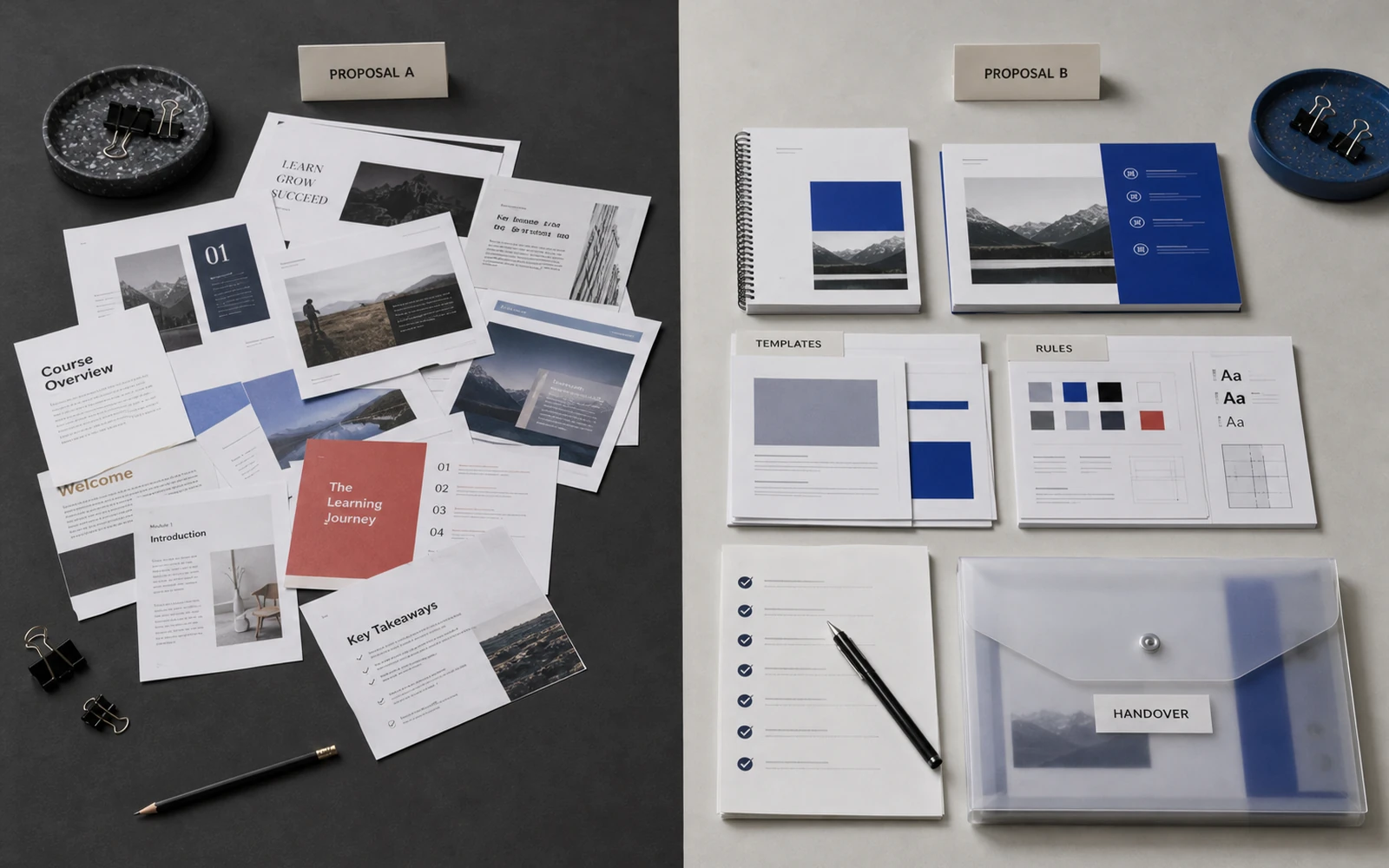
Compare the contents, not only the total. How many revision rounds. Which formats are in. What remains after handover: rules you can fill, or an archive of this launch’s layouts. Both are legitimate. Mixing them up in a tender is the fastest way to buy the wrong level.
When a custom mix makes sense
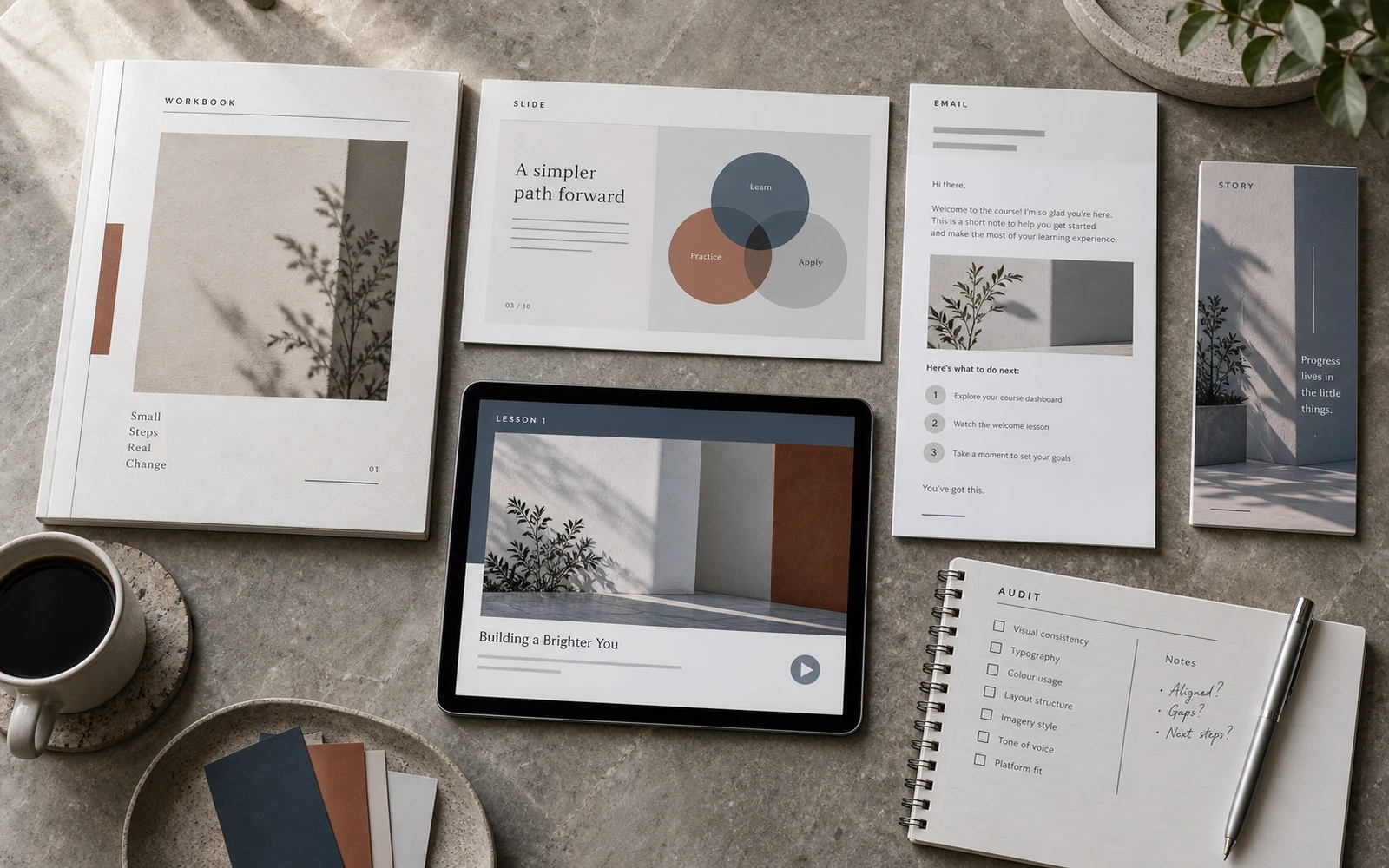
Not every product needs every format. A course with a strong live rhythm may need slides, worksheets and a webinar deck more than a thick PDF. An asynchronous programme may need the opposite: a workbook, platform navigation and emails. An expert with an existing audience needs campaign language. A new product also needs the offer to be clear in the sales graphics.
A custom mix is worth it when you buy the surfaces learners and buyers actually pass through. You are not paying for a “full premium set” nobody opens. You are paying for the layer that holds the product. Sometimes that means starting with the workbook and slides, and building the campaign for the next cohort. Sometimes it means designing the launch first, because that is what is selling now, and aligning the internal materials afterwards.
A budget is honest when the level, the boundary and the surfaces are named. Page count then describes volume. It no longer pretends to measure the whole job.
Discuss your course