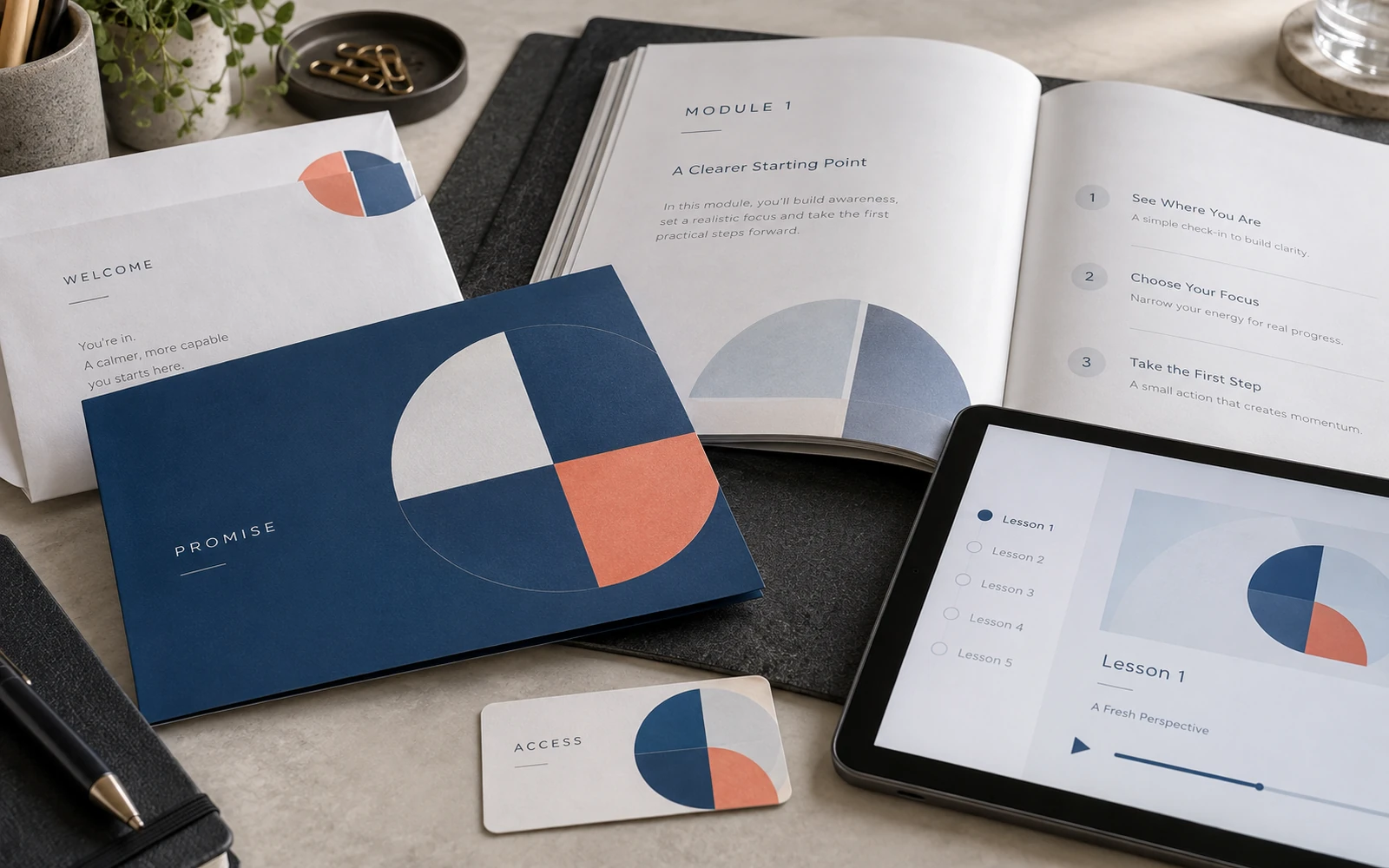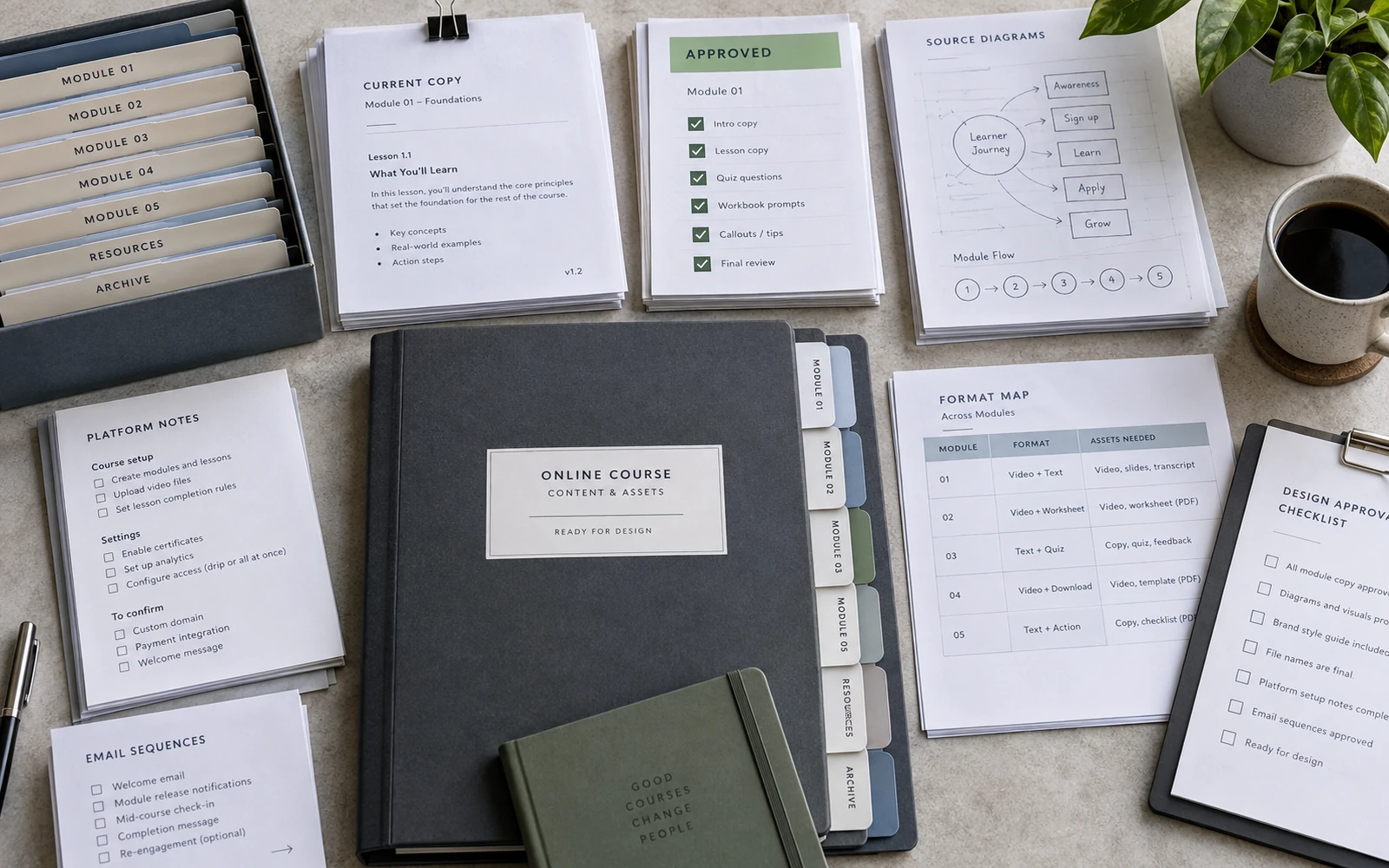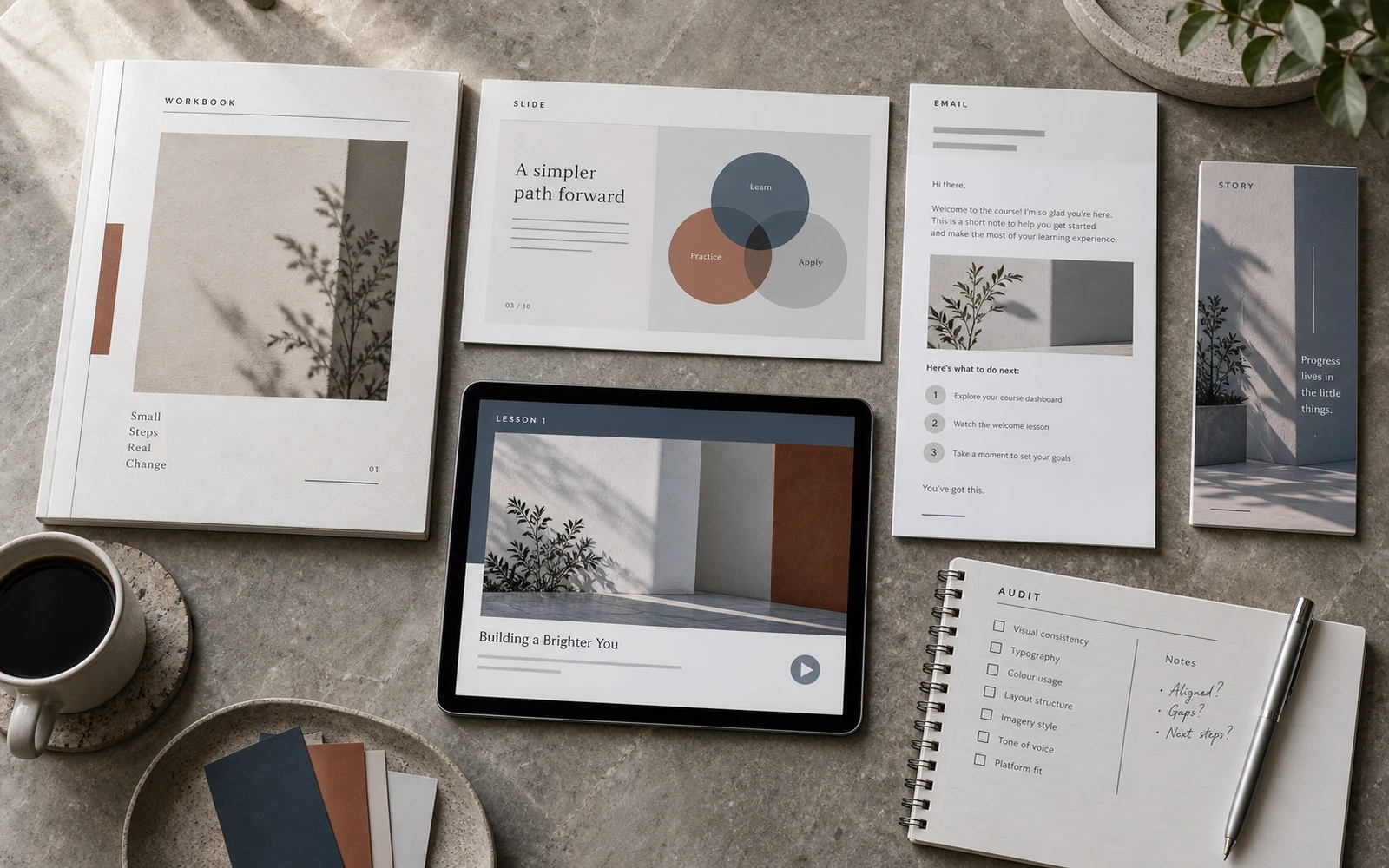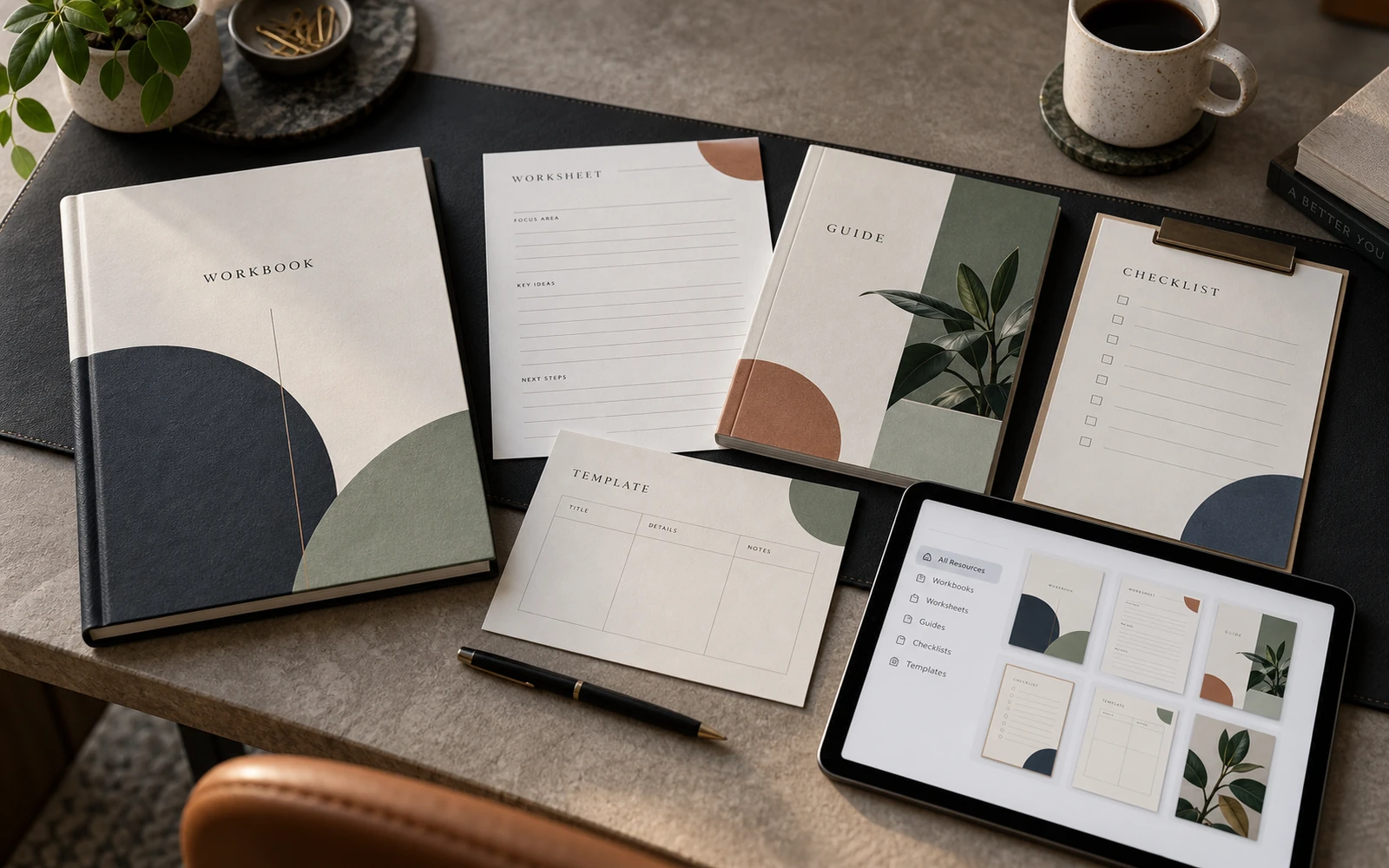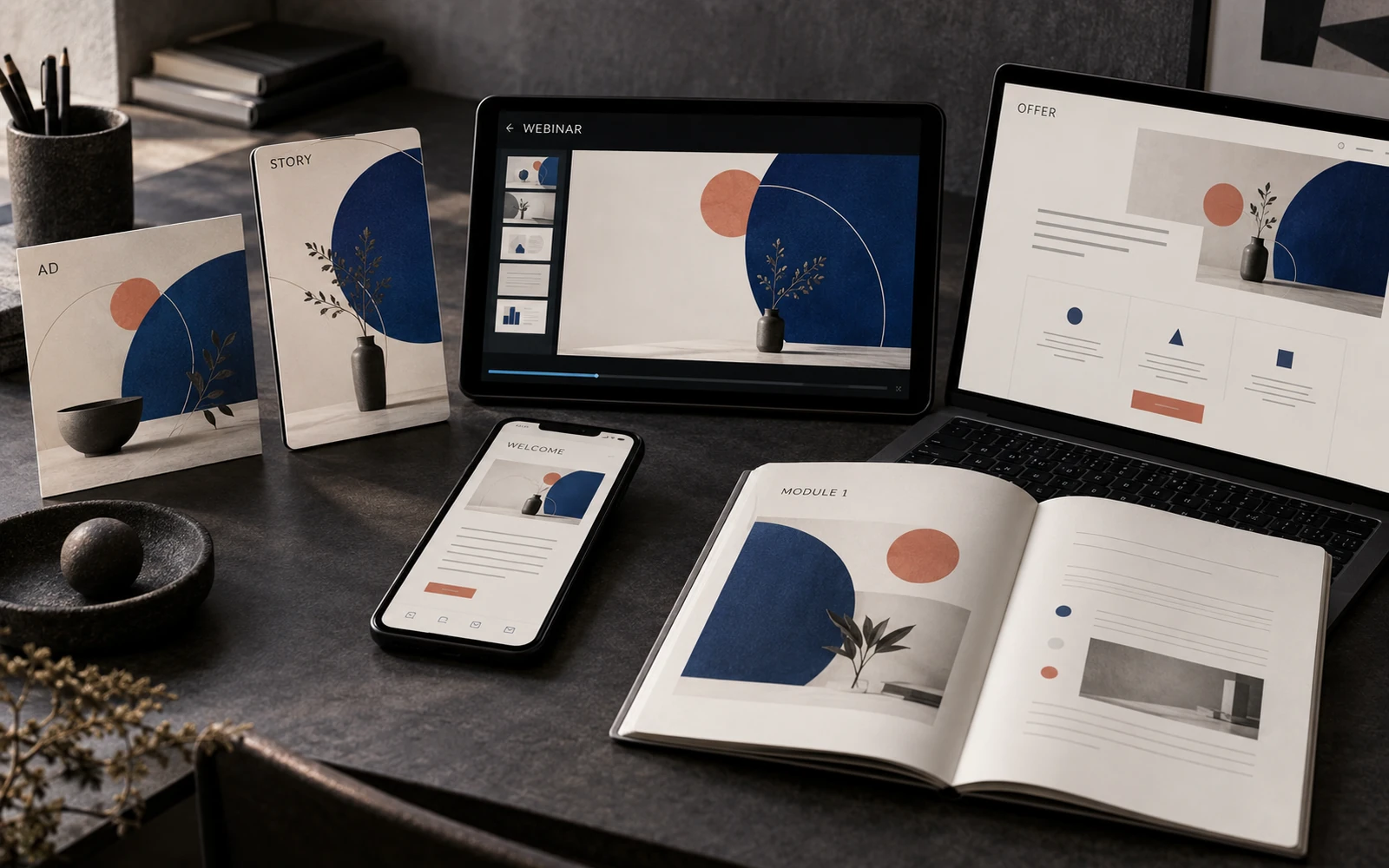
A launch is often built as a three-week campaign of its own. The course can wait. This is not another essay on why a product needs one language. It is about the campaign as chapter one: what each frame is for, a map of the funnel surfaces, and how three motifs from the offer land in module one.
The brief then changes. Not “which creatives do we need by Friday.” Which move should someone meet in an ad and still recognise after they have paid.
Treat the launch as the first chapter of the course
Ads, stories, the webinar and the sales page already teach the taste of the product. A motif you put on the outside needs an address on the inside. The model from the ad belongs in the module, not only on the offer slide. The calm tone of the stories belongs in the access email, not in a default from the email tool.
Without that link, the campaign sells one course and the dashboard delivers another. That is not a question of whether the files look “premium.” It is a break in the plot.
Map the launch ecosystem
The ecosystem is wider than a carousel and a banner. It includes ads, organic posts, stories, webinar screens, sales-page graphics, emails, registration covers, reminders before going live, and onboarding the moment payment lands. Each surface has its own density. All of them share one language.
The map is there to show duplicates and holes. Stories and ads are often carefully made, and the “your access” email is not. Or the webinar looks like a different product because it was built in another deck. Or the sales page holds the character, and the traffic creative is assembled from stock compositions.
Label the job of each frame: recognition, proof, explaining the method, handling an objection, the invitation, urgency, care after payment. Once the jobs are named, it is harder to make every frame shout “buy” in the same tone.

Set flexible rules for the campaign
The campaign does not need a rigid template in which every frame looks the same. It needs flexible rules. Type and the hierarchy of the message. Grids for 9:16 and for the sales page. A family of imagery: live, editorial, diagrammatic — but one family. How motion behaves: pace, pause, what appears first.
Rules let you make variety without collapse. The webinar can be denser than stories. An ad can be shorter than an email. Onboarding can be quieter than the offer. A difference in density is a sign of a system, if the character holds. A difference in language is a sign the campaign was assembled as a pile of tasks.
Also write down what the campaign will not do. It will not rename the model between frames. It will not introduce a new diagram only for the “wow.” It will not shout urgency in a frame that is still explaining the method. A launch with prohibitions looks more adult than a launch in which every frame tries to close the sale on its own.
Make variety without visual collapse
One language is not monotony. Recognition, proof, objection-handling and urgency have different jobs — so they have different rhythms. Recognition holds the face of the product. Proof gives something concrete. An objection needs clarity, not ornament. Urgency works in short bursts and should not infect the whole stream.
Variety is built from jobs, not from new styles. A new style is the fastest way to “refresh” the funnel and lose the plot. Lay five frames of different jobs in a row. They may differ in tension. They may not look like five subcontractors.
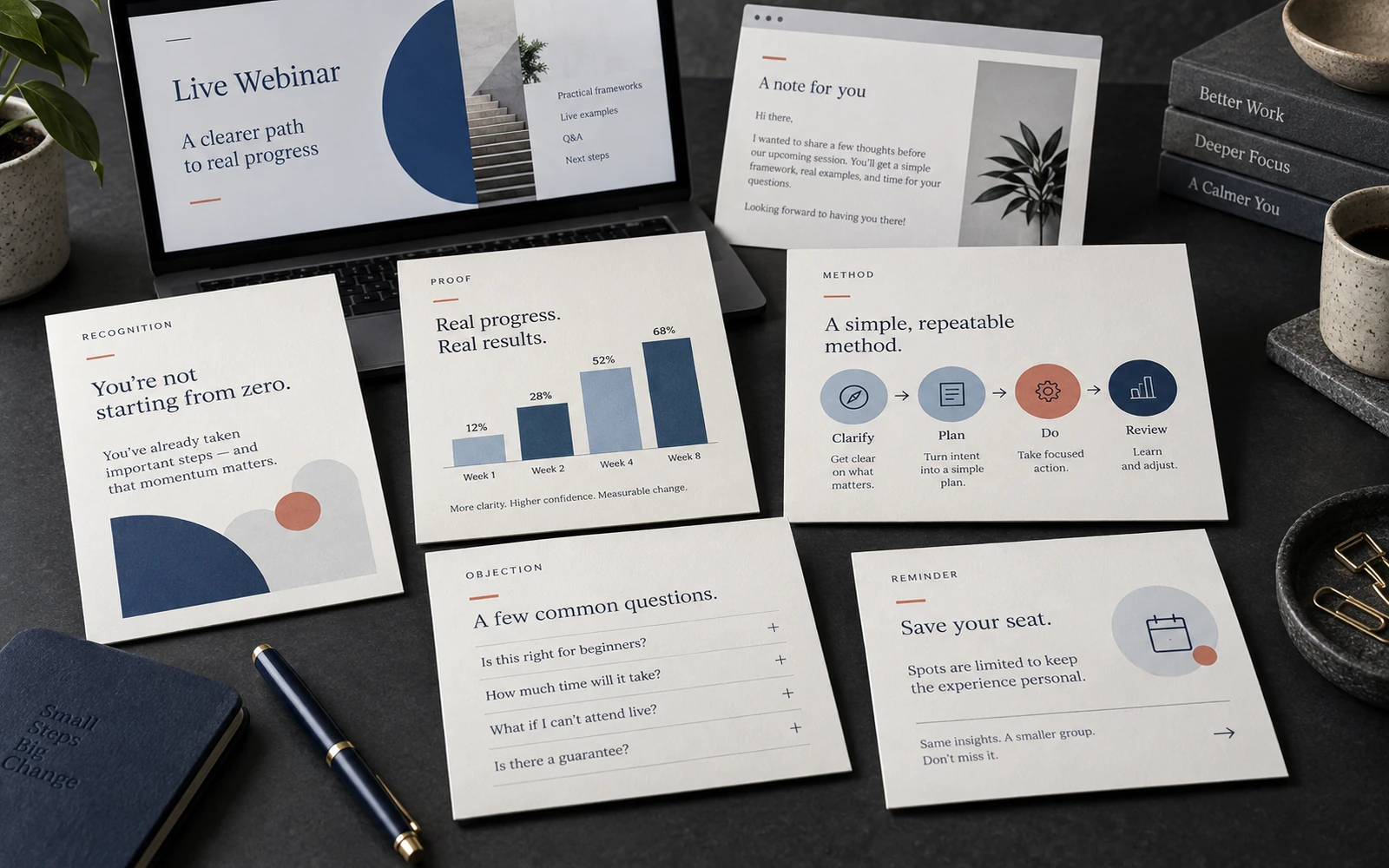
A strong launch does not look more expensive than the course. It looks like the same product, seen earlier.
Carry the promise into the learning
The campaign does not end at payment. Take three key motifs from the offer and find them a place in module one — as learning density, not as an ad inside the lesson. If the motif “a clear method” never appears on the model page, the person bought a plot the dashboard does not contain.
Onboarding is then the second paragraph of chapter one, not “customer care.” The access email continues the tone of the campaign. It does not open a new brand.
Prepare the system for the next launch
A sprint campaign costs as much the second time as the first. Keep frames by job, not an archive of creatives: recognition, method, offer, service screens for the webinar, the access email. Mark what can change with the season, and what is the spine of the plot. The next cohort is allowed to sound fresher. It is not allowed to look like a different product.
Then the launch introduces the course. It does not disguise it.