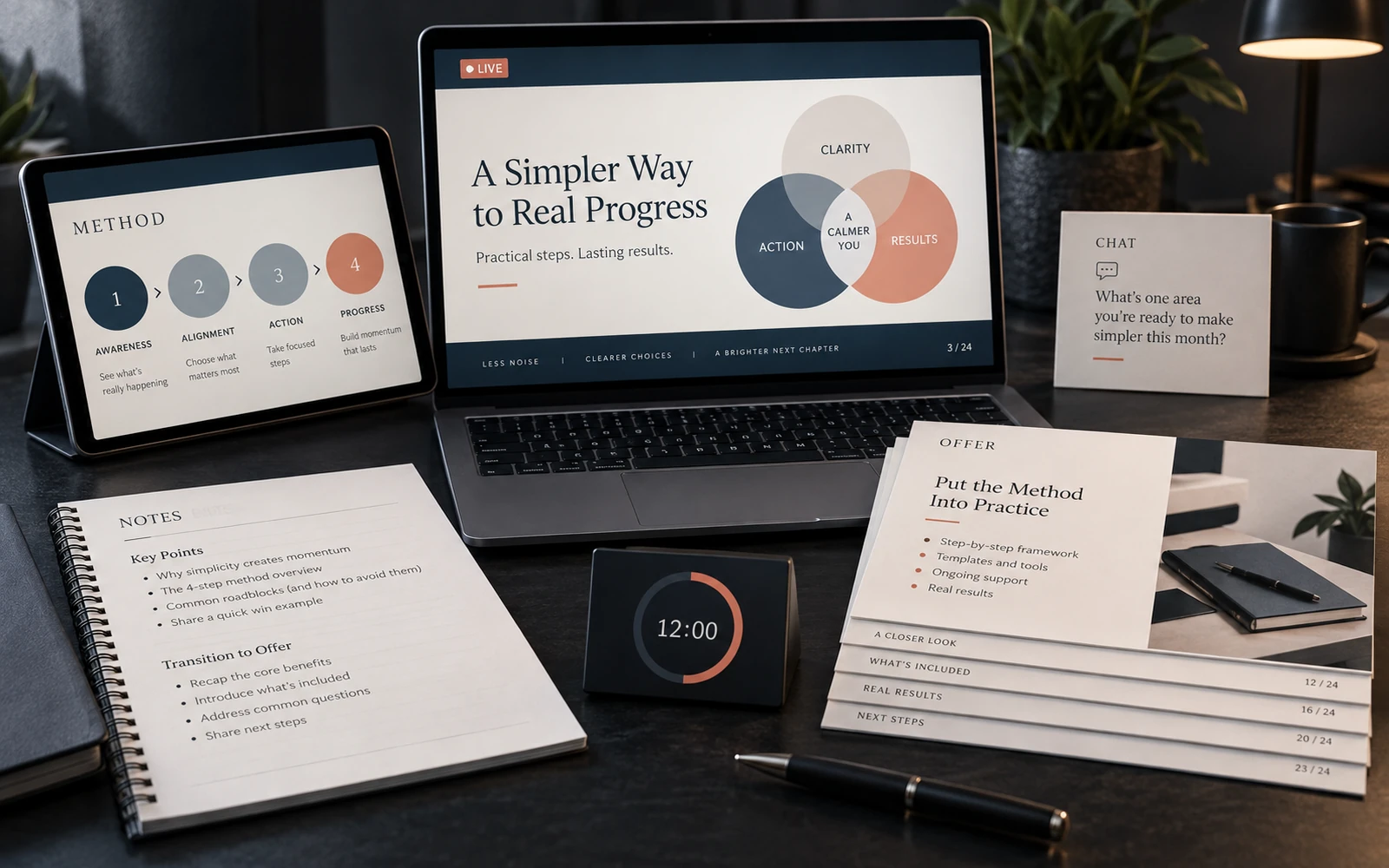
A webinar deck lives between teaching and conversion, in a live room. It is not a lesson-slide system. If the slide replaces the speaker, the room reads a document. If the deck only sells, trust is gone before the offer. What follows is the job of each frame, the drama of the session, and a move into the offer in the same language as the method.
Decide what the presentation is for
Speaker, slide, chat and recording do different work. The speaker carries nuance, pause, a live example. The slide holds one thing for the eye: a claim, a diagram, the name of a step. Chat catches friction and short answers. What remains after the session is what is left when the voice stops: the model, the name of the programme, the next step.
When the slide tries to say everything, the speaker becomes a narrator. When the slide is empty “for atmosphere,” the audience has nothing to hold in a difficult moment. When the offer arrives without a teaching arc, people still lack the language with which to judge it.
Write the deck brief in those roles. What someone should hear. What they should see. What they should have time to write down. What they will find in tomorrow morning’s email. A presentation that does not tell those layers apart will always be either overloaded or empty.
Build a teaching arc
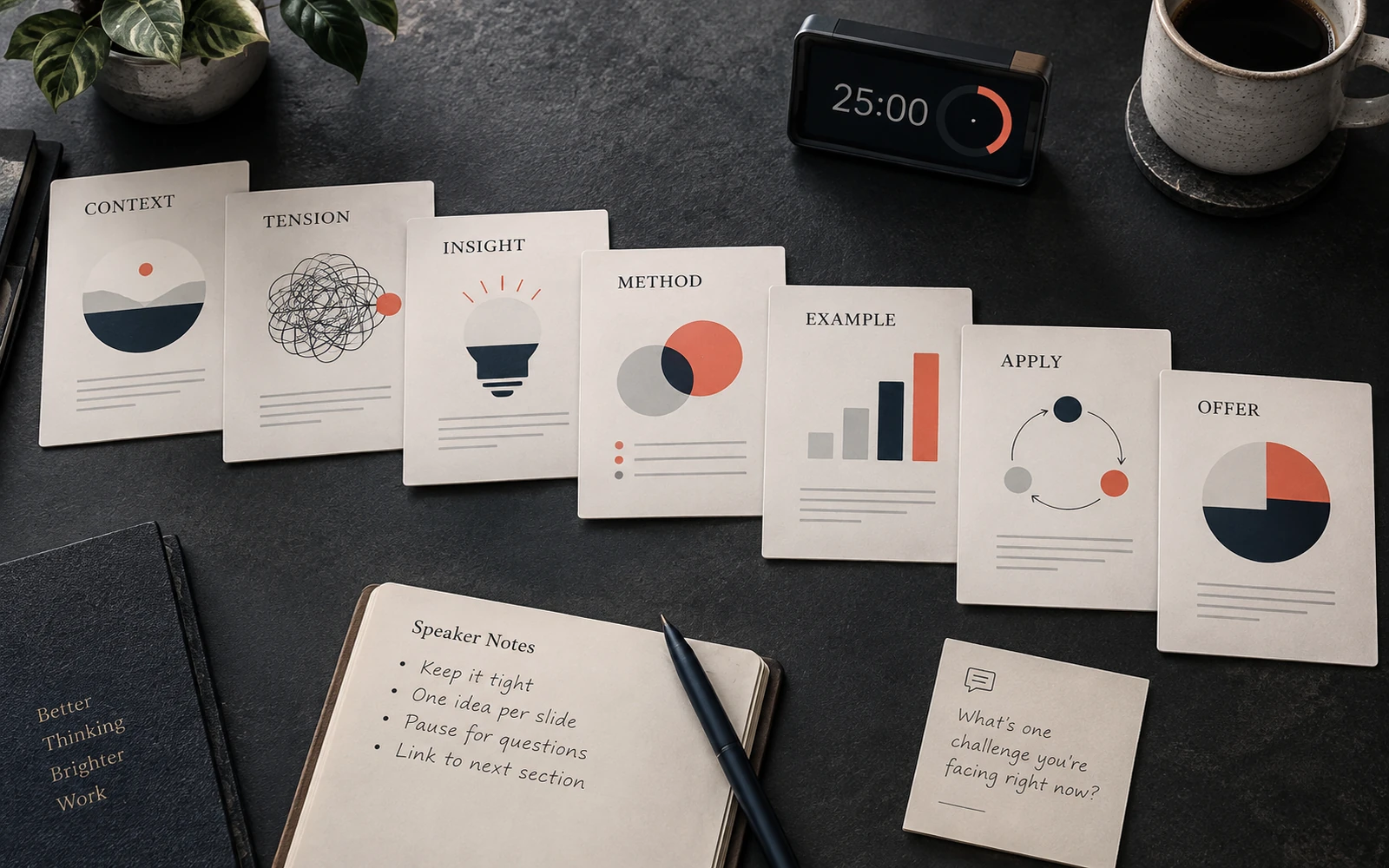
Live attention is held by a change of tension, not by the number of slides. A useful arc looks like this: context, tension, insight, method, example, application, then the move to the offer. The labels do not have to be these. The change of job for the audience does.
Context answers why we are here. Tension shows the cost of the usual way. Insight turns the frame. Method gives a structure that can be repeated. Example proves the structure lives somewhere other than the diagram. Application asks the person to try the method on their own case — even briefly, in chat or in a note. The offer then rests on a move already lived, not on an abstract benefit.
Cut the application and sell at once, and the deck teaches less than it appears to. Cut the tension and draw the framework at once, and the method looks like another diagram from the internet. Drama here is not theatre. It is respect for how a person agrees to think at all.
Design slides for live attention
A live session will not forgive workbook density. Very little can live on screen at once. One claim. Or a diagram with labels you can read while the speaker is talking. Or a short example. Rarely all of them.
Pace is built by what appears. Three slides that open a model step by step beat one slide on which every step is already drawn and the room lags behind the voice. Contrast is there so the claim does not drown in a decorative ground. Margins are there so the slide does not shout. But air without hierarchy is as harmful as a wall of text.
The test is in rehearsal, not in the layout. Speak the slide out loud. If you apologise for the number of lines, the slide is still a document. If your hand wants to click on before the thought has finished, there are too many frames, or they are empty.
Turn frameworks into something the room can hold
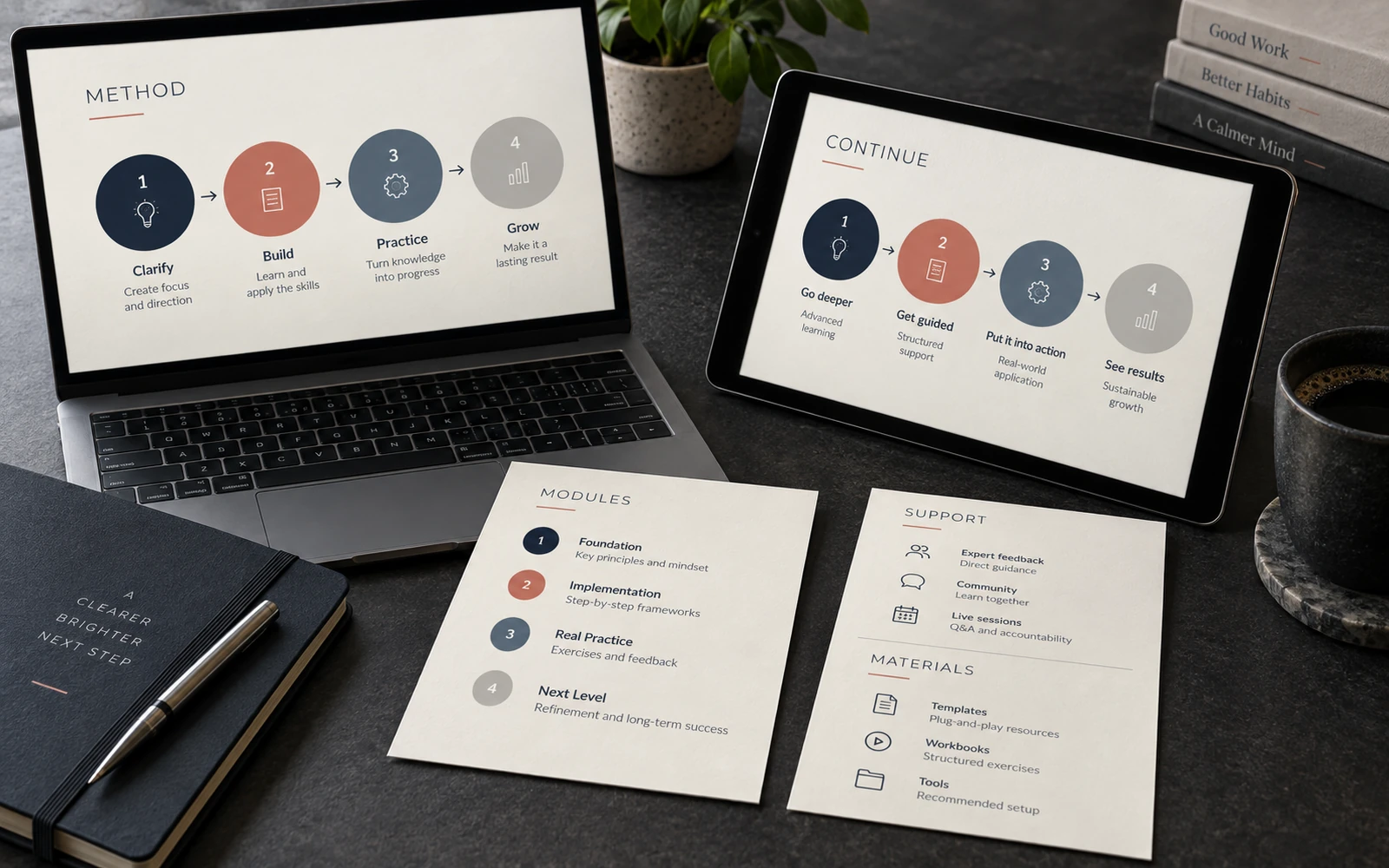
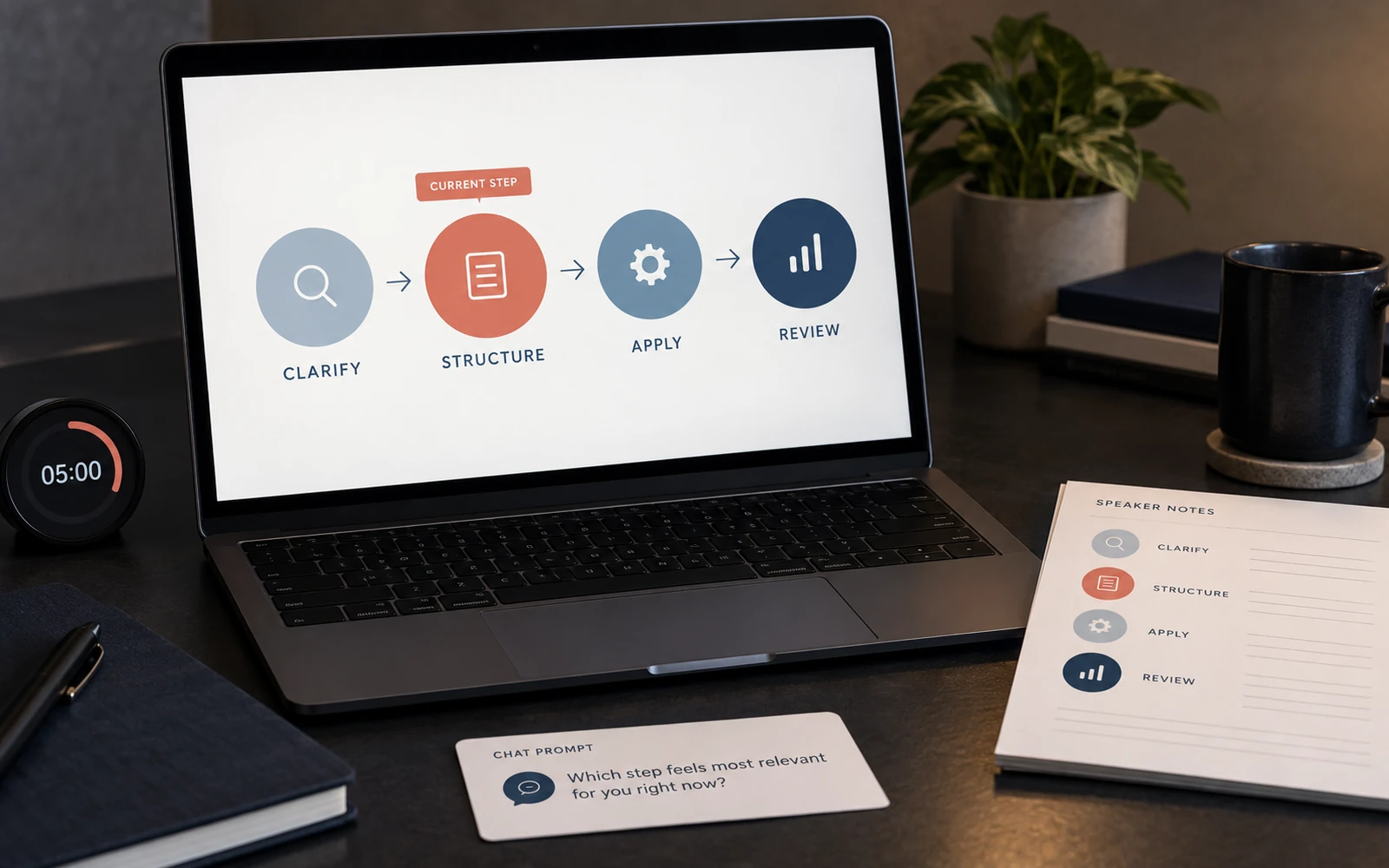
On a live session the method comes apart easily: the voice says one set of steps, the slide another, chat a third formula. One form on the deck, the same order as in speech, emphasis on the current step. The geometry of the method is built elsewhere. Here the diagram only holds the room’s memory while the speaker talks.
Do not draw every thought. On a webinar, a diagram the room cannot read in time with the voice is worse than no diagram.
An offer on a webinar works when it speaks the language of the method already shown — not the language of a sudden advertisement.
Make the offer a continuation
The proposal should not look like another deck dropped in at the end. The same type, the same diagram, the same way of naming steps. What changes is the job of the slide: from “understand this” to “here is where that move continues for longer.”
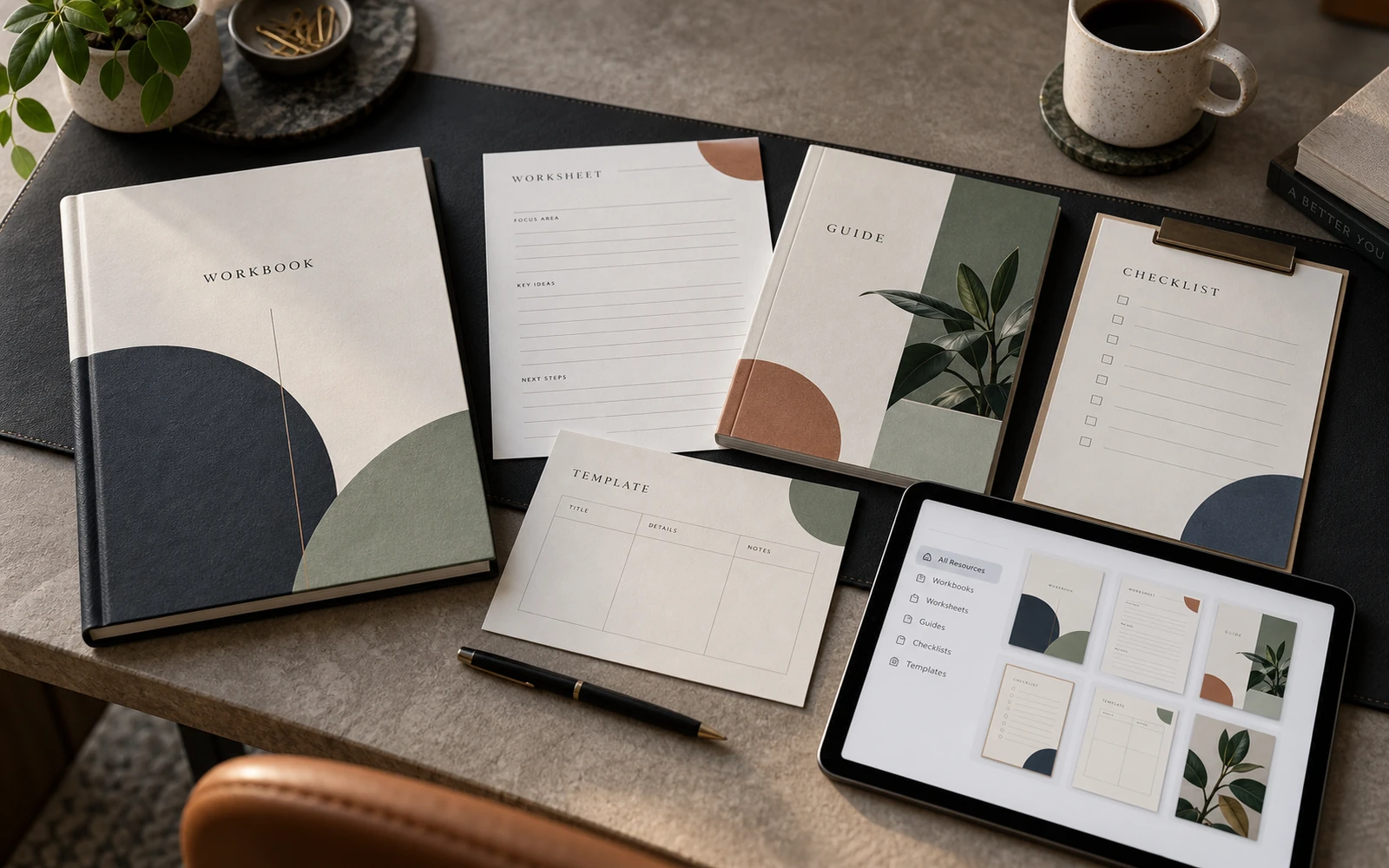
People have already seen the tension and the method. The offer shows where the method unfolds into a programme: modules, support, materials, the format of the work. If you were precise in the teaching and loud and vague in the sale, the room feels a change of contract. Trust gathered over forty minutes is spent in four.
The natural move is often shorter than it seems. You do not need twenty slides of benefits. You need a clear match: here is what you just tried, here is how that looks inside the course. The price then stands on a structure already understood, not on atmosphere.
Prepare the deck for the session — and for reuse
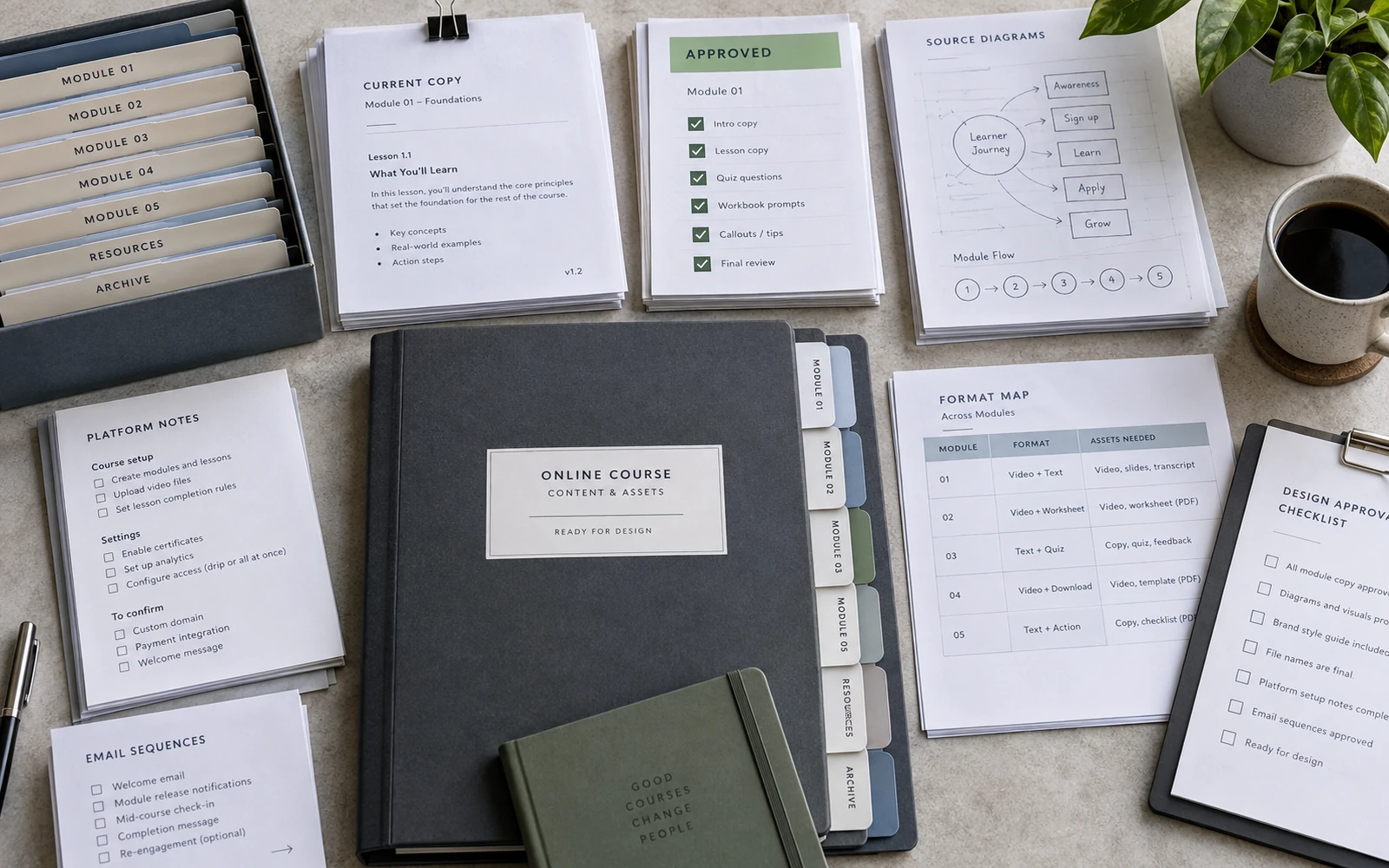
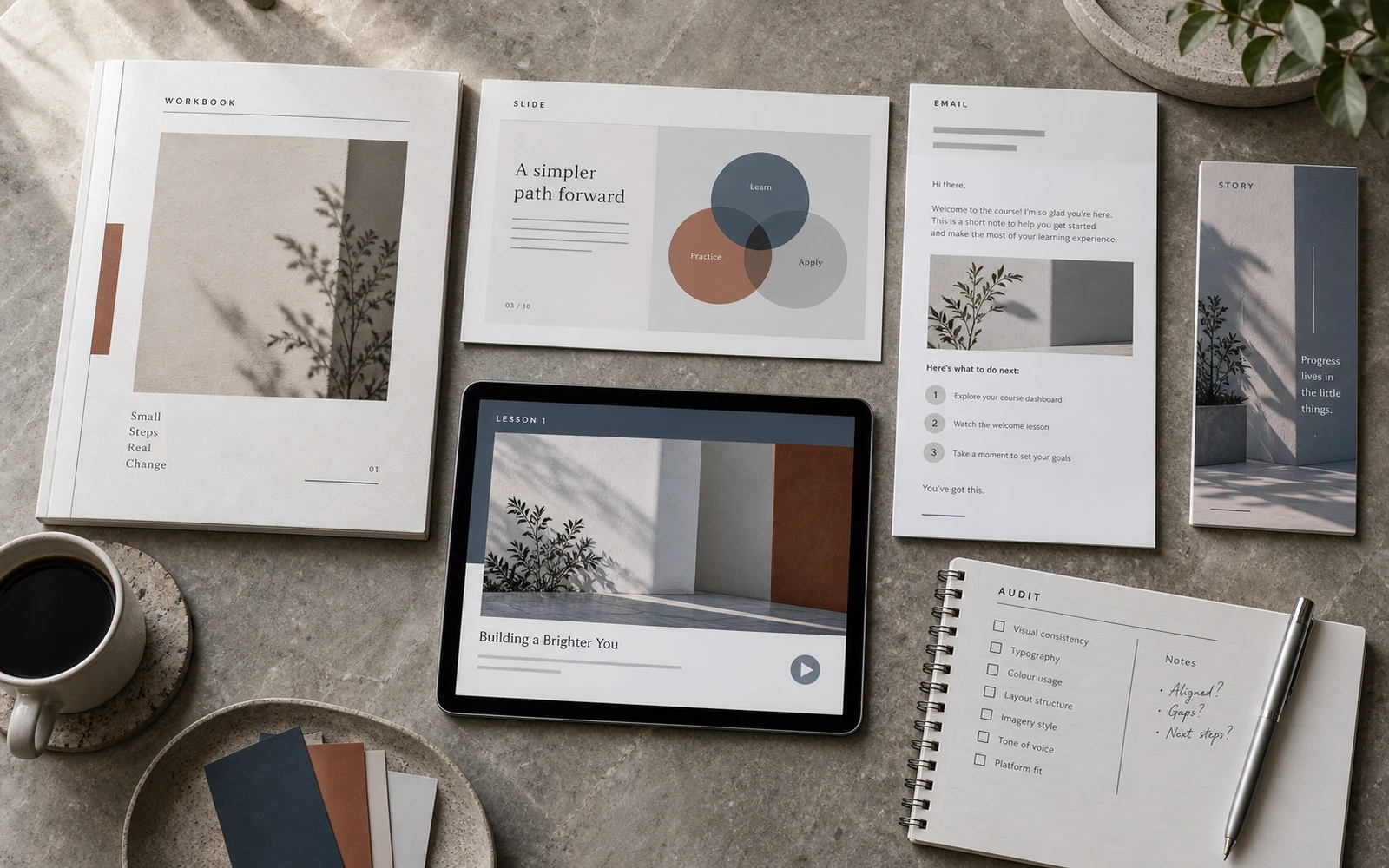
The deck has to survive both the live hour and the recording. Speaker notes do not belong on the slide the room sees. What reads on a large monitor dies in a small window. The recording needs a frame that works without a hand pointing. Cuts for the registration page and for clips come from the same deck, not a new style “for stories.”
The next session changes the examples and the emphasis of the offer, not the language of the method. If every presentation is built as a one-off, you are paying for an evening again as if the product did not exist.
When the roles stay distinct — the speaker talks, the slide holds, the offer continues the method — the webinar stops being a wall of text or an endless pitch.